The Wet and The Dry
Language: English
Language: English
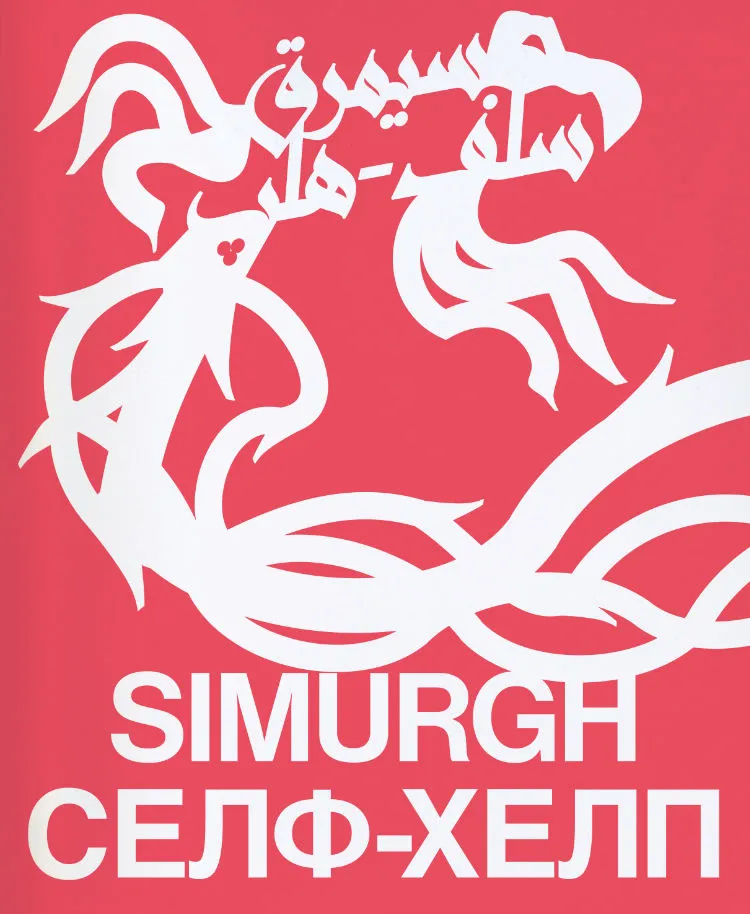
A visual and text based investigation led by Moroccan artist Bouchra Khalili during many years following the traces left by the Mouvement des travailleurs arabes, a group fighting for the rights of the Arab workers in France at the turn of the 1970s.
Khalili focused her attention on the theatre groups Al Assifa and Al Halaka who were created in this political environment. The publication unfolds from The Circle (2023), a video installation shown for the first time at the 15th Sharjah Biennale (2023), at Macba (2023) and at the Luma Foundation (in Arles in 2023-2024 and Zurich in 2025).
The book is published in conjunction with Bouchra Khalili's exhibitions as guest visual artist of the Festival d'Automne in Paris in 2025.
Texts by KJ Abudu, Bouchra Khalili, Mohamed Amer Meziane, Abdellali Hajjat ; interviews with Saïd Bouziri, Hedi Akkari, Smaïne Idri, Mustapha Mohammadi, Philippe Tancelin, Mia Radford, Lucas Yahiaoui.
Eleven performance-based projects by Dora García, documented through letters, emails and other elements from the artist's private correspondence with various interpreters of performances, whether they were direct collaborators of simple spectators.
Edited and prefaced by François Piron, Steal This Book, a tribute to Abbie Hoffmann's pamphlet of the same name, is not a definitive attempt at rendering the pieces on which it is based; it calls for a free, active and contradictory reception, that of an open archive. Part epistolary novel, part rough screenplay and part user's manual, Steal This Book proposes a body of discussions, questions without answers and endless ramblings, in place of the critique's or the artist's voice.
The book has also been presented in exhibitions as a Dora García sculpture meant to be stolen, but it can also be purchased in selected bookstores worldwide.
Contrary to the idea that would have art addressing the greatest possible number of people, Dora García (born in 1965 in Valladolid, lives and works in Barcelona), best known for her performance devices, is interested in what is enacted at the individual scale: in a radically conceptual form, at once accessible and elegant, she elects to transmit oddly coded messages, their ask being to bestir a specific relation with each and every visitor. Dora García is interested in everything that intervenes in the communication between an artist and his/her public: art no longer represents the world, but itself becomes a producer of realities often on the borderline of fiction and make-believe. It urges us to undergo experiences other than ordinary situations, at once simple and hard to grasp.
Dora García has had solo exhibitions at the MACBA in Barcelona, the Reina Sofia in Madrid and the SMAK in Gent. She represented Spain at the Venice Biennale in 2011, and was a part of the Skulptur Projekte Münster 07, the Sydney Biennial in 2009, the Biennale de Lyon in 2009 and Documenta 13 in 2012.
The work of Ceija Stojka (1933-2013) is considered today an invaluable testimony on the deportation and the holocaust of the Romani people during the Second World War. For the very first time, this publication considers equal to her graphic work the notes she wrote on the back of her drawings and paintings. Stojka's particular use of language, phonetically adapted from her knowledge of German, is here transcribed and translated into English, while giving access to both sides of her works.
Published on the occasion of the eponymous exhibition at Malmö Konsthall in 2021.
Ceija Stojka was born in 1933 in Austria to a family of Romani horse traders, the Lovaras. She was still a child when the nazi racial laws drove her into the hell of the concentration camps for 24 months. As a survivor, she covered up this trauma with a heavy silence for almost 40 years. In the 1980s, facing other tragic circumstances in her life, the denial of the Romani holocaust and the resurgence of extreme right-wing racist ideas in Austria, she felt an urgent need to testify. She wrote at first, then started to draw and eventually found her way by blending the two as a self-taught artist. She calls upon us, through her visions of childhood, to never turn a blind eye on what happened, and to remain vigilant as to what may emerge again. Ceija Stojka died in 2013 in Vienna.
Edited by François Piron.
Texts by Ceija Stojka, Noëlig Le Roux, Irka Cederberg.
Graphic design: Coline Sunier & Charles Mazé.
Francesca Percival, Felix Rapp and 1 more
Le Chauffage (french for “The Heater”) is an artist-run publication based in Brussels and Vancouver. It is conceived as a cross-continental, community oriented platform. Le Chauffage brings together the work and writing of artists / friends from different cities with the intent to spark discussion and fuel casual forms of critical discourse.
The second issue of Le Chauffage contains photographs and texts, photographs of text, photographs as text and vice versa. Loosely thinking through the format of The Photo Essay celebrated by John Szarkowski in an eponymously titled exhibition at MoMA in 1965, this issue considers some of the artistic possibilities that can be found in such an archaic and historically male-dominated form.
Many of the contributions that make up this second issue are not photo essays per se. But each one of them considers the printed page as a space in its own right. The magazine becomes an interior where words and images entertain a malleable and distinctly porous relationship. At times, it is also a space where artists and writers from different cities were invited to meet and collaborate. And since interest in other people is also an interest in yourself, it is always unclear who is really transforming who?
Contributions by: Bob Cain & Linda Miller, Moyra Davey, Laurie Kang, Niklas Taleb, Madeleine Paré & Diane Severin Nguyen, Josephine Pryde, Slow Reading Club, Ken Lum, Isaac Thomas, Vijai Maia Patchineelam, Artun Alaska Arasli & Graeme Wahn, Stephen Waddell, Maya Beaudry & Chloe Chignell, Lisa Robertson, groana melendez, Victoria Antoinette Megens and Will Holder.
Editors: Emile Rubino and Felix Rapp
Co-Editor: Francesca Percival
Design: Francesca Percival and Felix Rapp
Cover Design: Francesca Percival
Printed by: Cassochrome, Belgium
Edition of 350
'My aim for Mother Reader has been to bring together examples of the best writing on motherhood of the last sixty years, writing that tells firsthand of the mother's experience.
Many of the writings in Mother Reader comment on and interpolate one another, in citations, in footnotes, in direct homage. As I was assembling this collection one text would lead to one another, treasure-hunt fashion, the clue provided by an acknowledgement or bibliography. And just as often the writing circles back.
In Mother Reader chapters are excerpted from autobiographies, memoirs, and novels; entries are lifted from diaries; essays and stories are culled from collections, anthologies, and periodicals. My project has been to assemble a compendium or sampler of these ''kindred spirit'' works on motherhood, so that readers, and especially mothers with limited time on their hands, can access in one volume the best literature on the subject and know where turn to continue reading." [Moyra Davey in the introduction]
Writings by Margaret Atwood, Susan Bee, Rosellen Brown, Myrel Chernick, Lydia Davis, Buchi Emeta, Annie Ernaux, Mary Gaitskill, Susan Griffin, Nancy Hutson, Mary Kelly, Jane Lazarre, Ursula K. Le Guin, Doris Lessing, Ellen McMahon, Margaret Mead, Vivian Montgomery, Toni Morrison, Tillie Olsen, Alicia Ostrker, Grace Paley, Sylvia Plath, Adrienne Rich, Sara Ruddick, Lynda Schor, Mira Schor, Dena Schottenkirk, Mona Simpson, Elizabeth Smart, Joan Snyder, Elke Solomon, Susan Rubin Suleiman, Alice Walker, Joy Williams, Martha Wilson, Barbara Zucker.
The 9th HOOT pops up for the winter 2022-23, but the conception of this issue started well over a year ago at our beloved Plage Avant (Traduttore, traditore’s studio, Marseille).
We met Sophie T. Lvoff at many openings and art related events in Marseille these last few years, having a practice that appears mainly as photography, Gufo got curious about all the processes that she uses which involve sound, installation, writing… and more. She welcomed us in her studio of the city of Marseille where she recently settled.
We found out about the “trompe-l’œil” of this iconic checkered table, witnessed the installations of translucid and colored objects evolving on the sunny wall, and looked through her photographic chamber it’s called a large-format camera, but this is funny… For this issue, Sophie suggested to interview another artist, Moyra Davey, who also works in photography and writing, and appeared to have shared experiences too.
The topics of everyday life, intimacy that images embody in both their works, take another dimension as soon as their thoughts, voices and writing expand and express the entirety of their gestures.
This issue is the first interview between two native English-speaking artists, who have ties to the French language from childhood.
The penpals are the main characters of that encounter where we are very welcome to join in their very generous conversations. This is only an excerpt of a long and well referenced correspondence.
A special edition issue curated, designed and published by AVARIE, Paris and Labor Neunzehn, Berlin. It accompanies KAMERA SERIES, while it is an independent and valuable object to collect. The central idea that informs and directs the booklets’ montage is the interplay between the concepts of addition and subtraction. This is achieved by unveiling a missing image in the screening or an unreleased second from an artist's film, expanded to 24 pages. Additionally, each booklet contains a piece directly removed from the show.
The editing establishes a dialogue between film frames and performed writings derived from texts, scripts, storyboards, and notes. The KAMERA exhibition is consequently extended into a physical space—the book—allowing for its widespread dissemination, complementing and contrasting with its potential online occurrence.
KAMERA SERIES is a screening program of experimental films, video art works and printed matter taking place in a former GDR building in Berlin. Each event showcases a retrospective of selected films by an artist and a small exhibition of his/her publications or works on paper over a span of 4 days.
KAMERA centers on fostering a critical dialogue between different film formats and artists’ books. Through its regular occurrence, it aspires to create a space for community exchanges about contemporary image-making. KAMERA is a series conceived and curated by Labor Neunzehn and AVARIE.
Fascinated by the intersection of visual art and cinema, Helga Fanderl’s short poetic films evoke intense and sensitive experiences of the real world. Using a small hand-held super 8 camera, she creates filmic responses to her perceptions, weaving together imagery and emotions in dense, rhythmic patterns solely through in-camera editing. She presents silent films in the form of ‘compositions’, crafting unique programs for site-specific personal projections and transforming spaces into temporary cinemas.
Conceived as a visual résumé, Installation Views provides both a comprehensive overview of Charlotte Posenenske's solo exhibitions and a record of her numerous group shows.
In her Manifesto, Charlotte Posenenske stated: "I find it difficult to come to terms with the fact that art can contribute nothing to the solution of pressing social problems."
Developing her artistic practice throughout the 1960s, Posenenske produced a body of work that uniquely combined several strands of the art of the period: conceptualism, minimalism, and socially engaged participatory art. Her Manifesto, published in Art International in May 1968, lays out the social demands on art as well as the impossibility of fulfilling those demands. Shortly after its publication, Posenenske left the art world behind to pursue her studies in sociology, undertaking a new career in that field.
Conceived as a visual résumé, Installation Views provides both a comprehensive overview of Charlotte Posenenske's solo exhibitions and a record of her numerous group shows. The book features an essay written by curator Erlend Hammer on the role of documentary photographs in the circulation of works of art.
The book was published in conjunction with the eponymous show at the Haugar Art Museum in Tønsberg, Norway—the first full-scale presentation of the artist's oeuvre in Scandinavia. The exhibition showcased works from all the artist's major series of modular sculpture. Consisting of works made over the course of less than 12 months, between 1967 and 1968, preceding the abrupt end to Posenenske's career as an artist, the exhibition had the character of a snapshot. We are left wondering whether her withdrawal from the art world was a logical or necessary consequence of the development of the series. What are we to do with Posenenske's assertion that art is powerless to effectively change society for the better?