rile*books

Search books

Search books by title, author, publisher, keywords...

Cover of Seltsame Sterne starren zur Erde

Time has fallen asleep in the afternoon sunshine

Seltsame Sterne starren zur Erde

Sonia Si Ahmed

€20.00

For the project Time has fallen asleep in the afternoon sunshine a group of people/ performers memorize a book of their choice. Together they form a library collection consisting of living books. After years of learning by heart and reciting for readers, some of the books have now been written down from memory to create new editions, versions resulting from this process. This book is one of those books, chosen by one person, learned by heart and recited many times, and now written down again from memory. This edition is not a re-edition of the original text. It is a re-writing of the text after the process of reading, memorizing and reciting, with all the alterations that might have occured in the course of this process.

Language: English

recommendations

Cover of Ik ben Elias of het gevecht met de nachtegalen, door Maurice Gilliams

Time has fallen asleep in the afternoon sunshine

Ik ben Elias of het gevecht met de nachtegalen, door Maurice Gilliams

Wouter Krokaert

Performance €12.00

For the project Time has fallen asleep in the afternoon sunshine a group of people/ performers memorize a book of their choice. Together they form a library collection consisting of living books. After years of learning by heart and reciting for readers, some of the books have now been written down from memory to create new editions, versions resulting from this process. This book is one of those books, chosen by one person, learned by heart and recited many times, and now written down again from memory. This edition is not a re-edition of the original text. It is a re-writing of the text after the process of reading, memorizing and reciting, with all the alterations that might have occured in the course of this process.

Cover of I am Four Quartets by T.S Elliot

Time has fallen asleep in the afternoon sunshine

I am Four Quartets by T.S Elliot

Sébastian Hendrickx

For the project Time has fallen asleep in the afternoon sunshine a group of people/ performers memorize a book of their choice. Together they form a library collection consisting of living books. After years of learning by heart and reciting for readers, some of the books have now been written down from memory to create new editions, versions resulting from this process. This book is one of those books, chosen by one person, learned by heart and recited many times, and now written down again from memory. This edition is not a re-edition of the original text. It is a re-writing of the text after the process of reading, memorizing and reciting, with all the alterations that might have occured in the course of this process.

www.timehasfallenasleepintheafternoonsunshine.be

Cover of Appendix #4: Translation / Traduction

Time has fallen asleep in the afternoon sunshine

Appendix #4: Translation / Traduction

Victoria Pérez Royo, Léa Poiré and 1 more

Performance €15.00

The Appendixes #1-4 is an editorial series by Mette Edvardsen, Léa Poiré and Victoria Pérez Royo that came out of the project Time has fallen asleep in the afternoon sunshine. For a two-year residency at Les Laboratoires d'Aubervilliers (2022-23), they came together as a small work group, shaping the work process, hosting presentation formats and making the publication series on paper as four cahiers.

The cahiers comprise a collection of commissioned texts and contributions created for this context, selected documents and traces from work sessions and encounters organized during the residency, texts read together and republished for this occasion, a collection of references, notes in progress, unfinished thoughts and loose fragments - on paper, between pages.

Cover of Een dag in 't jaar door Herman Gorter

Time has fallen asleep in the afternoon sunshine

Een dag in 't jaar door Herman Gorter

Johan Sonnenschein

For the project Time has fallen asleep in the afternoon sunshine a group of people/ performers memorize a book of their choice. Together they form a library collection consisting of living books. After years of learning by heart and reciting for readers, some of the books have now been written down from memory to create new editions, versions resulting from this process. This book is one of those books, chosen by one person, learned by heart and recited many times, and now written down again from memory. This edition is not a re-edition of the original text. It is a re-writing of the text after the process of reading, memorizing and reciting, with all the alterations that might have occured in the course of this process.
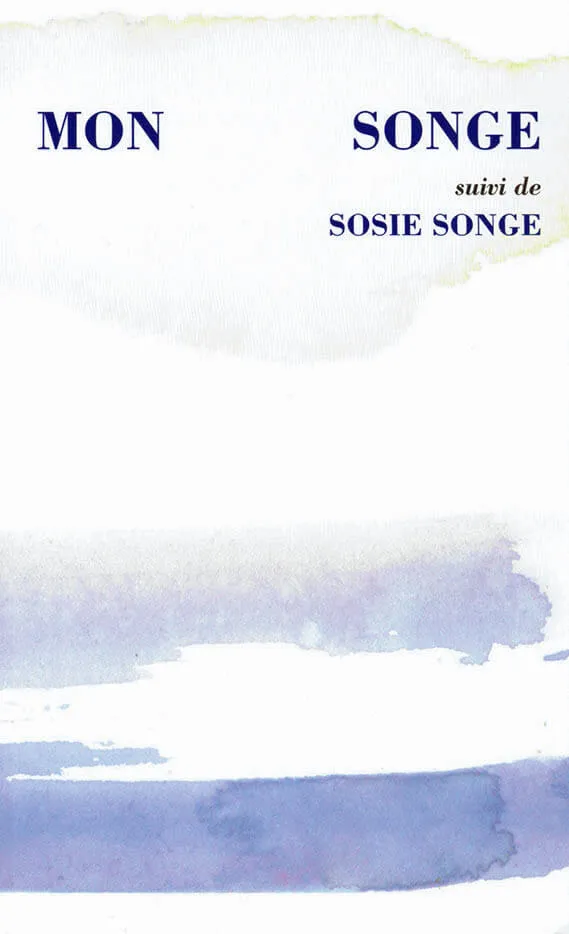
Cover of Rêveries du promeneur solitaire

Time has fallen asleep in the afternoon sunshine

Rêveries du promeneur solitaire

Sarah Ludi

For the project Time has fallen asleep in the afternoon sunshine a group of people/ performers memorize a book of their choice. Together they form a library collection consisting of living books. After years of learning by heart and reciting for readers, some of the books have now been written down from memory to create new editions, versions resulting from this process. This book is one of those books, chosen by one person, learned by heart and recited many times, and now written down again from memory. This edition is not a re-edition of the original text. It is a re-writing of the text after the process of reading, memorizing and reciting, with all the alterations that might have occured in the course of this process.
Cover of Salvation

Primary Information

Salvation

Jimmy DeSana

Salvation is a previously-unpublished artist book by Jimmy DeSana that he conceptualized shortly before his death in 1990. The publication contains 44 of the artist’s late photographic abstractions that quietly and poetically meditate on loss, death, and nothingness. Depicted within the works are images of relics, body parts, flowers, and fruits that DeSana altered using collage and darkroom manipulations to create pictures that are both intimate and other-worldly. Salvation provides a nuanced and sophisticated counterpoint to the prevailing work around HIV/AIDS at the time, which tended to favor bold political statements.

Variations of many of the works in this book were first presented at DeSana’s last show with Pat Hearn Gallery in 1988. Shortly thereafter, the artist began assembling a maquette of Salvation, using black and white images as place holders for the color works that he intended to comprise the final layout of the publication. Sadly, he was unable to fully realize Salvation in his lifetime, but on his deathbed, he dictated instructions to his longtime friend Laurie Simmons for completing the work; instructions which she noted on each page of the single-copy maquette. With these notes, Simmons was able to match extant slides  and sequencing. Simmons’ studio chose color gels from DeSana’s archive for each corresponding black and white image in the assembly of the publication. Thankfully, due to this recuperative work, Salvation—long-considered to be DeSana’s last major work—is now available for the first time, with every step taken to honor and embody DeSana’s original vision.

Jimmy DeSana (1949-1990) grew up in Atlanta, GA, and received his bachelor’s degree from the Georgia State University in 1972 before relocating to New York’s East Village in the early 1970s. Recent solo and two-person exhibitions include The Sodomite Invasion: Experimentation, Politics and Sexuality in the work of Jimmy DeSana and Marlon T. Riggs, Griffin Art Projects, Vancouver, Canada, 2020, and Remainders, Pioneer Works, Brooklyn, NY, 2016. DeSana’s work can be found in numerous public collections including the Institute of Contemporary Art, Boston, MA; Metropolitan Museum of Art, New York; Museum of Contemporary Art, Chicago, IL; Museum of Fine Arts, Houston, TX; Museum of Modern Art, New York, NY; and the Whitney Museum of American Art, New York, NY, among others. A major retrospective of DeSana’s work was exhibited at the Brooklyn Museum, New York, in 2022, accompanied by a catalogue co-published by the Brooklyn Museum and DelMonico Books.

Cover of Oriental Cyborg

Essay Press

Oriental Cyborg

Aditi Kini

Who is the Oriental Cyborg? asks Aditi Kini in this collection of notes, jokes, and queries into the provenance of a creature designed for labor, 3-D printed in the technoscientific post-colonies, modeled on old automata. Race is a technology, that we know, and technology can be raced — so why inquire into this at all? Perhaps this, the Oriental Cyborg, is a fantasy more than a memory, or an echo more than a form — or just an essayist’s extraction of personal anguish and humor from globalist decay.

Taking on the form of historical analysis / lyrical essay / documentary poem / experimental buzzword / positionality statement, this chapbook and its titular character might still be an elusive mystery even after reading.

“’What is a ghost but a person removed from corporeality?’ This is one among layers of questions Aditi Kini poses in Oriental Cyborg, a lyrical excavation into survival in the era of techno racial capitalism, and its “deleting touch” that so easily voids—reduces to faceless services—the exploited individuals performing various acts of techno-labor. A grieved searching drives this hybrid essay, which feels urgent and necessary as threats from AI grab headlines. This work compels us to see our culture’s love affair with technological progress as a means for continued colonization and domination. It also reminds us, and celebrates, that those erased don’t stay silent forever. We privileged may not be able to hear them yet, but those who are listening know. They roar.” — Allison Cobb

“In the mirror of Aditi Kini’s Oriental Cyborg, I become the monster—a hopeless automaton, an intelligence stripped of roar. With titanium-threaded theory, Kini radiantly stitches together the ideal Asian working machine. Get your own Oriental cyborg today: super dazzling and sexy, historically embroidered, an oracular truth who never tires, never complains, forever mute, what perfection!” — Lily Hoàng

Aditi Kini is an undisciplined writer. They’ve done both NYC and the MFA (at UC San Diego). They were a finalist/alternate for the 2020-22 Jerome Award for Literature. They edit Lumpenpockets, “a nonquarterly sick rag.” Read their words in Hayden’s Ferry Review, The Rumpus, Denver Quarterly, The New York Times, and elsewhere. They’re at work on multiple projects, all at once. They are blessed with two dogs, Lucy the Happy and Charly Kong, who make life worth living.

Cover of Oracular Transmissions

X Artists' Books

Oracular Transmissions

Etel Adnan, Lynn Marie Kirby

Oracular Transmissions weaves together three of the most recent collaborative projects Etel Adnan and Lynn Marie Kirby have completed through processes of exchange and translation: Back, Back Again to Paris (2013), The Alhambra (2016), and Transmissions (2017). 

The book also includes poems by Denise Newman, a friend to both Adnan and Kirby, and an introduction by Kadist Foundation curator Jordan Stein presenting their works and performances.