rile*books

Search books

Search books by title, author, publisher, keywords...

Cover of Lives Shaping Works Making Life

Bruno

Lives Shaping Works Making Life

Xavier Le Roy, Giulia Casartelli ed., Daniel Cordova ed., Livia Andrea Piazza ed.

€30.00

24 transcribed public conversations led by Xavier Le Roy with artists and cultural workers, creating a space where Le Roy's work meets the experiences of his guests.

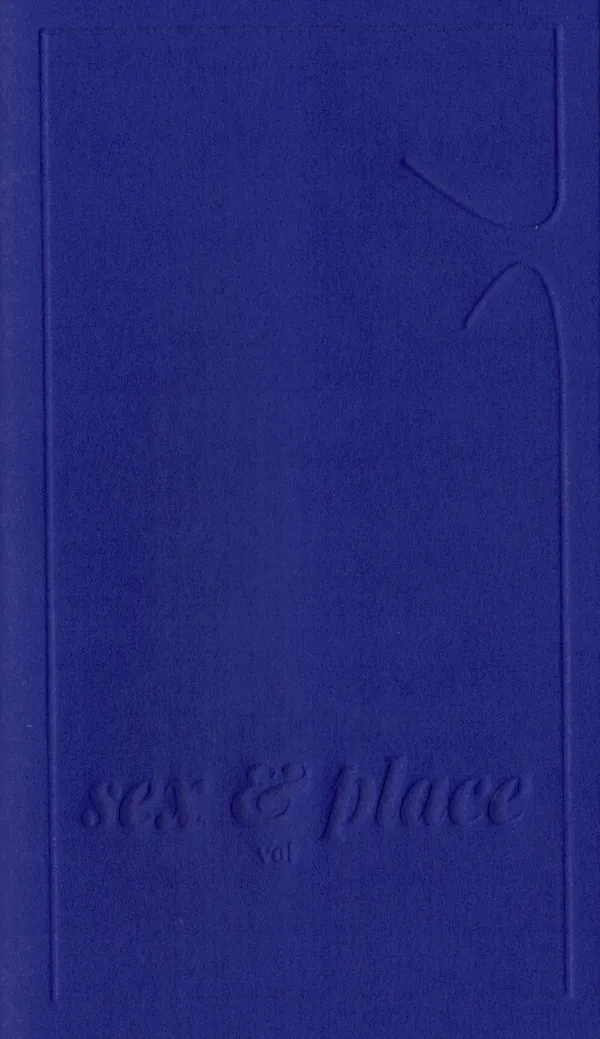
Lives Shaping Works Making Life is a collection of 24 transcribed public conversations titled Practices: Strategies and Tactics, led by Xavier Le Roy and hosted by the Institute for Applied Theater Studies in Giessen between November 2022 and November 2024. These dialogues bring together artists and cultural workers creating a space where Xavier Le Roy's work engages in conversation with the experiences of each guest. Each encounter follows the same set of 14 questions—printed on the book's cover—which serve as a flexible framework guiding the conversations. Through the careful editing of Giulia Casartelli, Daniel Cordova, and Livia Andrea Piazza, these conversations have been transformed into vivid, polyphonic texts that invite further reflection and offer a point of departure for expanding the dialogue beyond the original live encounters.

Conversations with Antonia Baehr, Matthias Mohr, João Fiadeiro, Herbordt / Mohren, Carolina Mendonça, Rolf Michenfelder, Ana Vujanović, Bojana Cvejić, Joana Tischkau, Giulia Casartelli, Susanne Zaun & Judith Altmeyer, Florence Lam, Olivia Hyunsin Kim, Jorge Alencar & Neto Machado, Rabih Mroué, Ruth Geiersberger, Swoosh Lieu, Arkadi Zaides, Valeria Graziano, Mette Edvardsen, Mala Kline, Sarah Parolin, Andros Zins-Browne, Rose Beermann.

Published in 2025 ┊ 448 pages ┊ Language: English

recommendations

Cover of Not Not Nothing

Varamo Press

Not Not Nothing

Mette Edvardsen

Performance €18.00

This publication brings together the texts from the pieces Black (2011), No Title (2014), We to be (2015) and oslo (2017) created and performed by Mette Edvardsen. These pieces have been developed using language as material, looking into the relationship between writing and speaking, between language and voice. Mette Edvardsen is working on the verge of the visible, considering choreography as writing.

Cover of Appendix #3: Orality

Time has fallen asleep in the afternoon sunshine

Appendix #3: Orality

Victoria Pérez Royo, Léa Poiré and 1 more

Time has fallen asleep in the afternoon sunshine Appendix #3 Orality includes contributions by Simon Asencio, Bruno De Wachter, Peter Szendy, Clara Amaral, Itziar Okariz, Jude Joseph, Léa Poiré and Mette Edvardsen.

Time has The Appendixes #1–4 is an editorial series by Mette Edvardsen, Léa Poiré and Victoria Pérez Royo that developed out of the project Time has fallen asleep in the afternoon sunshine. For a two-year residency at Les Laboratoires d’Aubervilliers* (2022–23), they came together as a small work group, shaping the work process, hosting presentation formats and making this publication series on paper as four cahiers.

The cahiers comprise a collection of commissioned texts and contributions created for this context, selected documents and traces from work sessions and encounters organized during their residency, texts read together and republished for this occasion, a collection of references, notes in progress, unfinished thoughts and loose fragments – on paper, between pages.

The Appendixes are organized around four themes: (1) The gesture of writing, (2) How to organize a library, (3) Orality and (4) Translation. In addition to being published on paper, the editorial series also consisted of other formats of presentations, exchanges and meetings organized as workshops, fieldwork, performances, conferences, collective readings and oral publications, taking place during their residency at Les Laboratoires d’Aubervilliers and in the vicinity.

The Appendixes is the work that continues, material that adds on, some of it perhaps too long or too detailed, unfit or unfinished. The four themes that their research is formulated around originate in specific experiences and questions from the practices of Time has fallen asleep in the afternoon sunshine (2010 – ongoing), and also the large publication on the project ‘A book on reading, writing, memory and forgetting in a library of living books’ (2019). The research was both a means of exploring these themes in greater depth and also of bringing them into contact with other artists and researchers working on similar or related subjects. The Appendixes offered them both the contexts and the pretexts for things to happen (in time, in space, on paper).

The Appendixes #1–4, published in these cahiers, do not present an overview or a summary of all of the activities and presentations that took place during the two years at Les Laboratoires d’Aubervilliers. What these cahiers offer is a space in which to hold some thoughts together and to share them in this form. It is one more step along the way, extending the research and work already begun and that will now continue.

Cover of Encounters – Embodied Practices

Archive Books

Encounters – Embodied Practices

Sandhya Daemgen, Raphael Hillebrandt and 2 more

Conversations about embodied strategies of knowledge production and knowledge transmission based on the choreographic and curatorial practices of about fifteen international choreographers, performers, dramaturges and curators.

In the context of the numerous ethical-political challenges of the global present, actors from the dance and choreography scene both in Berlin and internationally talk about forms of knowledge production beyond the prevailing conception found in Western modernity. They counter the mind-body separation and the notion of a universality of knowledge with multiplicities of knowledge production that emerge with and from the reality of differently situated bodies.

What potential do embodied practices offer for emancipatory movements? How can community be created through these practices, and what responsibilities does this entail? What role does the body play in the preservation and transmission of knowledge?

In this publication, edited by the choreographers and curators Martha Hincapié Charry, Sandhya Daemgen, Raphael Moussa Hillebrand and Matthias Mohr; Lukas Avendaño, Wagner Carvalho, Sandhya Daemgen, Ismail Fayed, Alex Hennig, Raphael Moussa Hillebrand, Martha Hincapié Charry, Isabel Lewis, Matthias Mohr, Prince Ofori, Mother "Leo" Saint Laurent, Léna Szirmay-Kalos, Thiago Granato and July Weber conduct conversations about embodied strategies of knowledge production and knowledge transmission based on their respective choreographic and curatorial practices.

Cover of Appendix #4: Translation / Traduction

Time has fallen asleep in the afternoon sunshine

Appendix #4: Translation / Traduction

Victoria Pérez Royo, Léa Poiré and 1 more

Performance €15.00

The Appendixes #1-4 is an editorial series by Mette Edvardsen, Léa Poiré and Victoria Pérez Royo that came out of the project Time has fallen asleep in the afternoon sunshine. For a two-year residency at Les Laboratoires d'Aubervilliers (2022-23), they came together as a small work group, shaping the work process, hosting presentation formats and making the publication series on paper as four cahiers.

The cahiers comprise a collection of commissioned texts and contributions created for this context, selected documents and traces from work sessions and encounters organized during the residency, texts read together and republished for this occasion, a collection of references, notes in progress, unfinished thoughts and loose fragments - on paper, between pages.

Cover of Aisopika Aesopica

Ariel Ink

Aisopika Aesopica

Rūta Junevičiūtė

The bilingual book ‘Aesopica’ documents and extends Rūta Junevičiūtė’s research on the Aesopian language and the influence of political censorship to contemporary collective body, first presented in 2020 as the eponymous solo exhibition at the National Gallery of Art and as a permanent outdoor installation at the Rupert Art Center, Vilnius. 

Taking as a starting point the historical phenomenon of Aesopian language, which was widespread in Lithuanian culture during the Soviet era, and in parts of the Russian Empire as early as the 19th century, Junevičiūtė aims to investigate the interrelationship between generations, the gray zones of collective identity creation and the processes of (un)censoring the archives of our bodies.

Aesopian language – a term coined after Ancient Greek fabulist Aesop (gr. Aísōpos), is a type of cryptic communication system, where a text has several layers of meaning often contradictory to each other and which seek to convey official and subversive hidden meanings simultaneously. It is usually employed under conditions of omnipresent state censorship to communicate officially forbidden or taboo subjects and opinions. As a system it contains three members – an author, a censor, and a reader. It uses various modes of circumlocution and euphemisation, innuendo and poetic paraphrasing, which can also be seen as an aesthetic style. It has been advocated for artistic benefits as poetics of omissions, concealment, and travesty. On the other hand, it has been criticized as a sign of conformity and humiliation. In Lithuania, after the fall of the Soviet Union, it has been popularly regarded as a position of dissent, but such an interpretation received criticism from contemporary scholars. “Such a mode of expression is probably as old as censorship itself” – a historian told us.

Text contributors: Alfonsas Andriuškevičius, Edgaras Gerasimovičius, Rūta Junevičiūtė, Goshka Macuga, Anastasia Sosunova, Grėtė Šmitaitė, Tomas Venclova, Ana Vujanović

Language editors: Dangė Vitkienė, Aira Niauronytė, Gemma Lloyd

Translators: Alexandra Bondarev, Erika Lastovskytė, Justinas Šuliokas, Mantė Zagurskytė-Tamulevičienė, Aistis Žekevičius.

Illustrations: Rūta Junevičiūtė.

Cover of Remembering a Dance – Part of Some Sextets 1965/2019

Lenz Press

Remembering a Dance – Part of Some Sextets 1965/2019

Yvonne Rainer

A re-examination of Yvonne Rainer's Parts of Some Sextets, a radical performance and pivotal piece in the American choreographer's career, which led her to theorize her conception of dance in the 1960s, before being revived in 2019.

Parts of Some Sextets, Yvonne Rainer's 1965 performance for ten people and twelve mattresses, represents a turning point in the American choreographer's oeuvre. "My mattress monster," as Rainer calls it, was built in her formative years with the experimental downtown New York group Judson Dance Theater. In this work, she asserted her exploration of "ordinary" actions as well as her disregard for narrative constructions to create an intricate choreography that unfolded with a new scene every thirty seconds.

More than half a century after its premiere, Rainer, in collaboration with choreographer and dancer Emily Coates, directed the 2019 revival of the piece for the Performa 19 Biennial in New York, grappling with the changing contexts of a new presentation of her radical performance. Remembering a Dance: Parts of Some Sextets, 1965/2019 delves into every aspect of this dance, from its original manifestation to its reconstitution.

This book, designed by visual artist Nick Mauss, includes previously unpublished archival images and documents from the 1965 stagings at the Judson Memorial Church in New York and the Wadsworth Atheneum in Hartford, Connecticut. Texts by Emily Coates, RoseLee Goldberg, Jill Johnston, Kathy Noble, Yvonne Rainer, David Thomson, Lynne Tillman, and Soyoung Yoon, as well as a new interview with Rainer, pose questions about the trajectories of artworks, performers, and audiences, all while tracing the life—and afterlife—of a dance.

Edited by Emily Coates. 
Texts and contributions by Emily Coates, RoseLee Goldberg, Jill Johnston, Kathy Noble, Yvonne Rainer, David Thomson, Lynne Tillman and Soyoung Yoon; conversation between Yvonne Rainer, Emily Coates and Nick Mauss.

Cover of Koreografi

Self-Published

Koreografi

Ann-Christin Berg Kongsness

Performance €14.00

Koreografi / Choreography is a magazine initiated and edited by Solveig Styve Holte, Runa Borch Skolseg and Ann-Christin Berg Kongsness. The magazine consists of texts written by Nordic artists within the field of dance and choreography.

Cover of Ana Mendieta - Search for Origin

This Side Up

Ana Mendieta - Search for Origin

G. Gourbe, C. Guardiola Bravo and 2 more

Devoted to Cuban-born American artist Ana Mendieta (1948–1985), this monograph appears with an exhibition at Museo de Arte Contemporáneo de Castilla y León, which brings together around 100 works from over fifteen years of production (1968–1985). The exhibition explores how the artist never ceased to reinvent herself through political and vibrant contemporary work, developing an original, ephemeral sculptural language, at times performative in act and informed by her research into primitive myths and rock art. It reveals her relationship to the visible and invisible, her way of rendering the unspeakable intelligible through traces of the body and its relation to nature.