rile*books

Search books

Search books by title, author, publisher, keywords...

Cover of Kong's Finest Hour: A Chronicle of Connections

Seagull Books

Kong's Finest Hour: A Chronicle of Connections

Alexander Kluge

€35.00

In a world full of devils, the giant ape Kong defends what he loves the most. But who and what is this undomesticated animal? Might it reside within us? As we tread confidently, is this where the earth opens up beneath us?  

In Kong's Finest Hour, Alexander Kluge explores anew the accessible spaces where Kong dwells within us and in our million-year-old past. The more than two hundred stories contained in this volume form a chronicle of connections that together survey these spaces using diverse perspectives. These include stories about the folds of Kong's nose, the voice of the author's mother, the poet Heinrich von Kleist and Jack the Ripper, the indestructability of the political, and the supercontinent Pangaea that once unified the earth. Dissolving theory into storytelling has been Kluge's lifelong pursuit, and this magnificent collection tells stories of people as well of things.

Published in 2021 ┊ 342 pages ┊ Hardcover ┊ Language: English

recommendations

Cover of Living Translation

Seagull Books

Living Translation

Gayatri Chakravorty Spivak

Living Translation offers a powerful perspective on the work of distinguished thinker and writer Gayatri Chakravorty Spivak, revealing how, throughout her long career, she has made translation a central concern of the comparative humanities.

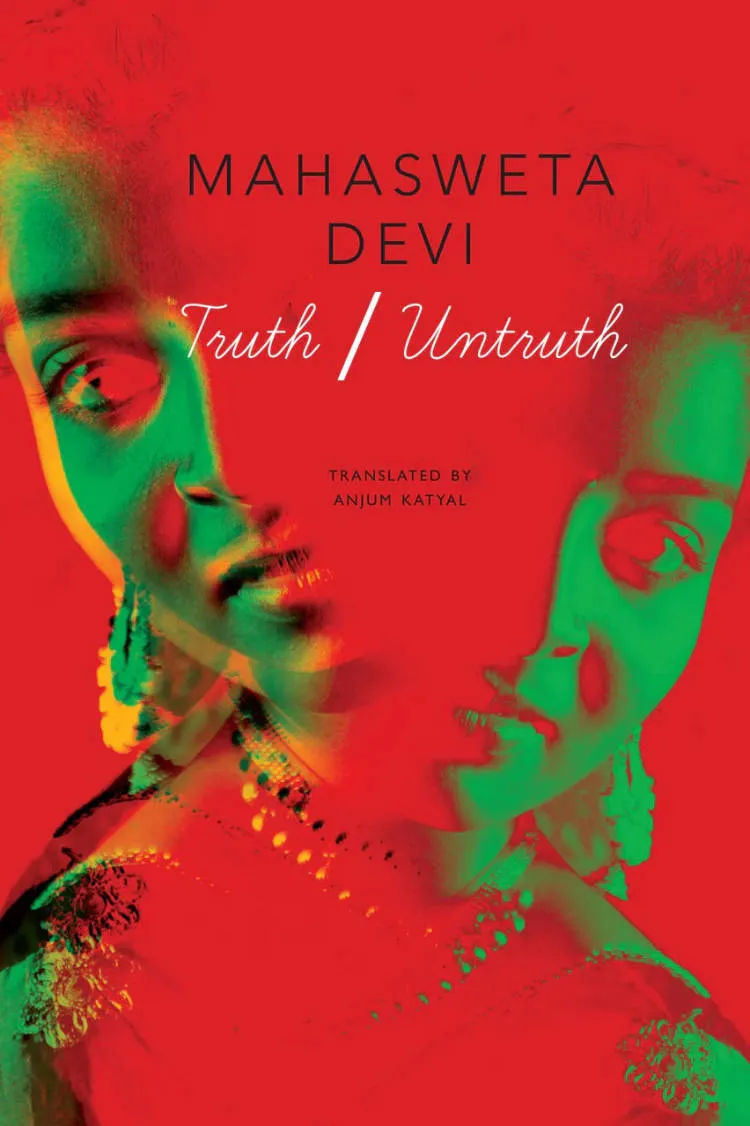
Starting with her landmark "Translator's Preface" to Jacques Derrida's Of Grammatology in 1976, and continuing with her foreword to Mahasweta Devi's Draupadi and afterword to Devi's Chotti Munda and His Arrow, Spivak has tackled questions of translatability. She has been interested in interrogating the act of translation from the ground up and at the political limit. She sees at play at border checkpoints, at sites of colonial pedagogy, in acts of resistance to monolingual regimes of national language, at the borders of minor literature and schizo-analysis, in the deficits of cultural debt and linguistic expropriation, and, more generally, at theory's edge, which is to say, where practical criticism yields to theorizing in untranslatables.

This volume also addresses how Spivak's institution-building as director of comparative literature at the University of Iowa—and in her subsequent places of employment—began at the same time. From this perspective, Spivak takes her place within a distinguished line-up of translator-theorists who have been particularly attuned to the processes of cognizing in languages, all of them alive to the coproductivity of thinking, translating, writing.

Cover of Passage to the Plaza

Seagull Books

Passage to the Plaza

Sahar Khalifeh

Fiction €24.50

In Bab Al-Saha, a quarter of Nablus, Palestine, sits a house of ill repute. In it lives Nuzha, a young woman ostracized from and shamed by her community. When the Intifada breaks out, Nuzha’s abode unexpectedly becomes a sanctuary for those in the quarter: Hussam, an injured resistance fighter; Samar, a university researcher exploring the impact of the Intifada on women’s lives; and Sitt Zakia, the pious midwife.

In the furnace of conflict at the heart of the 1987 Intifada, notions of freedom, love, respectability, nationhood, the rights of women, and Palestinian identity—both among the reluctant residents of the house and the inhabitants of the quarter at large—will be melted and re-forged. Vividly recounted through the eyes of its female protagonists, Passage to the Plaza is a groundbreaking story that shatters the myth of a uniform gendered experience of conflict.

Cover of What do you worship?

Pendulum

What do you worship?

Beth Casserly

Poetry €11.00

What do you worship? What claims your time, your faith, your silence? What are the icons you carry, the relics you protect, the devotions that define you?

For our inaugural issue, we invite you to reflect on the objects, ideas, rituals, and obsessions that shape your devotion. Worship is not confined to temples or texts, it flickers in longing glances, whispered prayers, silent routines, and fervent beliefs. It can be sacred or profane, communal or solitary, chosen or inherited.

We encouraged our writers and artists to interpret this theme freely, critically, emotionally, playfully, or abstractly. Whether they explored worship through fiction, nonfiction, poetry, visual art, or hybrid forms, we were looking for work that comforts, commands, or consumes.

This issue features art and writing from: Triinu Silla, Michel Krysiak, Anna Tracey, Antonina Anna Kubicka, Ari Wentz, Jonathan David Sijl, Renacuajo Sánchez, Florence Hutchinson, Marta Calero Segura, Eden Ridout, Artémis Toumi, Simone Viola, Zoe Pappouti, Laura Soto Sánchez, Autumn Anderson, Woodkern, Cathal McGuire, Nena Pawletko, Ignacio Aguilera, Marine Victoria Lobos Garay, Andreea Luță, Isabel Ferreras González, Rafael Torrubia, Emilia Tapia, KC Willis, Simon Jin, Jacky Weerman, Róisín Gallagher, and Rin Anishchanka. 

Cover of Paris, When It's Naked

Post Apollo Press

Paris, When It's Naked

Etel Adnan

Fiction €16.00

Etel Adnan's novel Paris, When It's Naked amazes our retinas, ears, lips, fingertips, and noses with sensing, talking, and envisioning the city of Baudelaire and Delacroix, Mallarme and Picasso, Sartre and Djuna Barnes, Miller and Nin, Vietnamese and African refugees, revolutions and Bohemia.

This tale of the Creative Now is told through the fine-tuned sensibility of Etel Adnan, the expatriate poet-painter who knew the French Capital as wholly as she did Beirut and San Francisco, her other homes. She is also the author of Sitt Marie-Rose, an underground novel of the Lebanese Civil War, and many books of poetry. This work is a philosophically charged lyric in prose. The elan vital of every word evokes the eternal present of this wise woman. A highly personal, life-enhancing masterpiece in a deathly age of impersonality. An indespensable book by an indispensable writer. (Words by Morgan Gibson)

Cover of Someone Who Isn't Me

Rose Books

Someone Who Isn't Me

Geoff Rickly

Geoff Rickly’s debut novel Someone Who Isn’t Me is a feverish journey through the psyche of someone who no longer recognizes himself. 

When Geoff hears that a drug called ibogaine might be able to save him from his heroin addiction, he goes to a clinic in Mexico to confront the darkest and most destructive versions of himself. In this modern reimagining of the Divine Comedy, survival lurks in the darkest corners of Geoff’s brain, asking, will he make it? Can anyone?

Cover of Goddamn Failure

Filthy Loot

Goddamn Failure

Ira Rat

Fiction €14.00

Goddamn Failure gathers the early grotesque and absurd works of cult writer Ira Rat for the first time. Many of them are previously unpublished.

This book is not intended for children or people with good taste.

Cover of Amanda

Maria Editions

Amanda

Olga Micińska

Fiction €15.00

The artist book Amanda is greatly inspired by “Tradeswomen” quarterly magazine for women in blue-collar work, published in the 1980’s and 1990’s in the United States. Amanda is similarly thought as a periodical dealing with the subjects of technology and industry from a feminist (not solely female) angle. The first issue contains fiction stories of an emancipatory character, citing trade associations, oil industry in Iran and ghosts of the printer feeders.

The publication is made in the framework of The Building Institute, an experimental organisation aiming to strengthen the position of femmes builders in the domain of technical construction work. Amanda brings together literary texts by Maria Toumazou, Samantha McCulloch, Sepideh Karami and Madeleine Morley, combining fiction stories with visual artwork. 

Olga Micińska is a visual artist currently living in Amsterdam. Graduated from the MA Art Praxis program at the Dutch Art Institute and holds an MFA in Sculpture from the Academy of Fine Arts in Warsaw. Also trained as a woodworker, collaborates with craft studios of various domains. Recently she has initiated The Building Institute.

The Building Institute (TBI) is an experimental platform aiming to emancipate the undermined knowledges dwelling in the craft domains, and to unpack diverse questions related to technology and the means of production. TBI combines art’s speculative competences with the grounded practice of manual labor, manifesting its objectives through educational activities, exhibitions, and publications.