rile*books

Search books

Search books by title, author, publisher, keywords...

recommendations

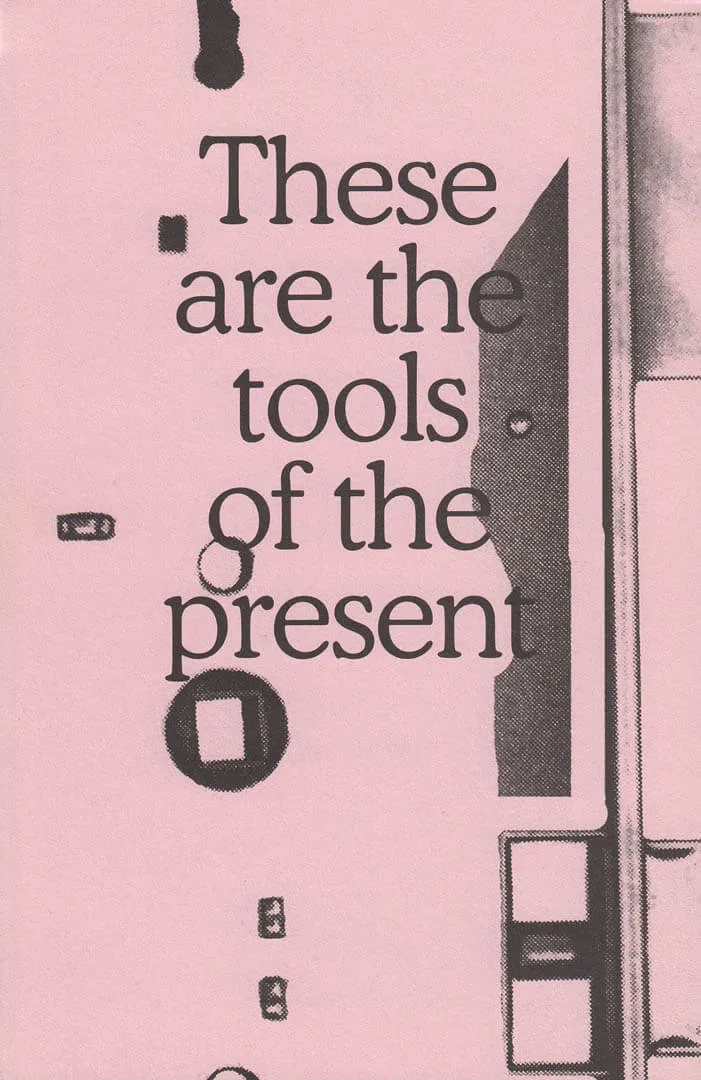
Cover of These are the tools of the present

Mophradat

These are the tools of the present

Mai Abu ElDahab, November Paynter and 1 more

This publication comprises a series of interviews with contemporary artists, musicians, and writers who are in dialogue with Beirut and Cairo. While not purporting to be an overview of the art scenes in these cities, this book begins to draw a picture of how artists think about what it means to be active in the contexts of these cities. It offers insight into the circumstances that structured these artists’ stories, and the often accidental influences that have shaped how their practices have developed.

Cover of Girls Like Us #6 - Secrets

Girls Like Us

Girls Like Us #6 - Secrets

Jessica Geysel, Sara Kaaman and 2 more

A secret can be a private space for self-creation – or a shared site of pleasure.

We explore secrets in a plethora of forms and contexts. From layered accounts of mediaeval ecstasy to the unexplored sensory experience of smell. From camouflaged play to queer readings of astrological charts and the hidden history of house music. From a very analog point of view to the outskirts of the internet.

Cover of A Book Knot Book

Body Text

A Book Knot Book

Sara Kaaman

Performance €20.00

A Book Knot Book is a 208 pages long performance, the first from the research and publishing initiative Body Text. In this study of language in action systems of meaning-making crash, sparkle and swoon. In a playful voice over A Book Knot Book self-reflects on the materialities and choreographies of publishing, reading and writing. With guest stars in fragments; Monique Wittig, Yvonne Rainer, Cristina Rivera Garza, Amiri Baraka, Will Rawls, David Abram, Thich Nhat Hanh and more. 

Edited and designed by Sara Kaaman. Published with the support of Stockholm University of the Arts.

Cover of HOOT nr. 9 — Moyra Davey & Sophie T. Lvoff

GUFO

HOOT nr. 9 — Moyra Davey & Sophie T. Lvoff

Sophie T. Lvoff, Moyra Davey

Periodicals €12.00

The 9th HOOT pops up for the winter 2022-23, but the conception of this issue started well over a year ago at our beloved Plage Avant (Traduttore, traditore’s studio, Marseille). 

We met Sophie T. Lvoff at many openings and art related events in Marseille these last few years, having a practice that appears mainly as photography, Gufo got curious about all the processes that she uses which involve sound, installation, writing… and more. She welcomed us in her studio of the city of Marseille where she recently settled.

We found out about the “trompe-l’œil” of this iconic checkered table, witnessed the installations of translucid and colored objects evolving on the sunny wall, and looked through her photographic chamber it’s called a large-format camera, but this is funny… For this issue, Sophie suggested to interview another artist, Moyra Davey, who also works in photography and writing, and appeared to have shared experiences too.

The topics of everyday life, intimacy that images embody in both their works, take another dimension as soon as their thoughts, voices and writing expand and express the entirety of their gestures.

This issue is the first interview between two native English-speaking artists, who have ties to the French language from childhood.

The penpals are the main characters of that encounter where we are very welcome to join in their very generous conversations. This is only an excerpt of a long and well referenced correspondence.

Cover of A Dance Mag - Issue 04: Structure

Dance Lit

A Dance Mag - Issue 04: Structure

Jana Al Obeidyine

Periodicals €19.00

Issue 04, Structure, traces the scaffolding of our lives, seen and unseen. We travel from the palaces of Versailles to the basements of Russian resistance, from origami folds to mechanized labor, from cosmic geometry to the twitch of a stimming hand. These are the choreographies that hold us, train us, divide us, and sometimes set us free. This issue moves through power's choreography with Vinícius Portella tracing repression from TikTok algorithms to Candomblé persecution, Sasha Portyannikova documenting dance as survival under Russian authoritarianism, and Ellen Jeffrey revealing how stimming becomes its own radical dance practice. Mariam Ala-Rashi finds cosmic alignment in contortion while Michael O'Connor explores the body as origami, structure folded into self. Katja Vaghi contrasts baroque precision with contemporary chaos, and Nathaniel Moore exposes the market forces shaping European dance. Cover and insert artist, Maria Harfouche, captures structure through double-exposed analog photography and layered compositions that reveal how moments build upon each other.

A Dance Mag is an independent magazine that looks at the world through the lens of dance. It transcends differences, distances, and disciplines to tell the stories of people from all over the world, who are dancing their lives and giving their bodies a voice. 

Cover of fierce pussy

Primary Information

fierce pussy

fierce pussy

Photography €30.00

This eponymously titled publication by fierce pussy brings together thirty-nine of the legendary art collective’s posters, from works made in the urgent early days of the AIDS crisis to present-day advocacy for Queer and Trans rights. In keeping with fierce pussy’s activism in public spaces, the publication is designed to allow readers to tear out any of the posters to share, wheatpaste, scan, photocopy, and distribute or to easily open the book to any page to hang it on a wall. Combining calls for political and social action, proud reclamations of derogatory language, and pointed questions, the posters in fierce pussy address pressing sociopolitical issues in the group’s distinctive voice.

Emerging during a decade steeped in the AIDS crisis and LGBTQ+ activism, fierce pussy brought Queer identity directly into the streets in a manner characterized by the urgency of those years. In recent years they have expanded to also present their work in galleries and museums, while continuing to intervene in the public space, always working with an economy of means and a collective ethos of inclusion and solidarity.

This publication was originally published by Printed Matter in 2008 to coincide with a retrospective exhibition of the collective’s work. This new expanded edition includes twenty-five additional posters.

fierce pussy is an art collective formed in New York City in 1991. Originally composed of a fluid and often-shifting cadre of dykes, the collective was active through 1994. In 2008, the four core founding members Nancy Brooks Brody (1962–2023), Joy Episalla, Zoe Leonard, and Carrie Yamaoka began working together again. Adamantly low-tech and low-budget, fierce pussy has always relied on modest resources: old typewriters, found photographs, and their own baby pictures. In the early days, much of the work was produced using materials and resources they had on hand and the equipment at their day jobs. This publication exemplifies the ethos of the group—to share their work and messaging with the masses.

Managing Editor: Jules Spector
Designers: Garrick Gott and Bryce Wilner

Cover of An Archive of Feelings

Duke University Press

An Archive of Feelings

Ann Cvetkovich

In this bold new work of cultural criticism, Ann Cvetkovich develops a queer approach to trauma. She argues for the importance of recognizing—and archiving—accounts of trauma that belong as much to the ordinary and everyday as to the domain of catastrophe. An Archive of Feelings contends that the field of trauma studies, limited by too strict a division between the public and the private, has overlooked the experiences of women and queers. Rejecting the pathologizing understandings of trauma that permeate medical and clinical discourses on the subject, Cvetkovich develops instead a sex-positive approach missing even from most feminist work on trauma. She challenges the field to engage more fully with sexual trauma and the wide range of feelings in its vicinity, including those associated with butch-femme sex and aids activism and caretaking.  

An Archive of Feelings brings together oral histories from lesbian activists involved in act up/New York; readings of literature by Dorothy Allison, Leslie Feinberg, Cherríe Moraga, and Shani Mootoo; videos by Jean Carlomusto and Pratibha Parmar; and performances by Lisa Kron, Carmelita Tropicana, and the bands Le Tigre and Tribe 8. Cvetkovich reveals how activism, performance, and literature give rise to public cultures that work through trauma and transform the conditions producing it. By looking closely at connections between sexuality, trauma, and the creation of lesbian public cultures, Cvetkovich makes those experiences that have been pushed to the peripheries of trauma culture the defining principles of a new construction of sexual trauma—one in which trauma catalyzes the creation of cultural archives and political communities.

Cover of Information Activism: A Queer History of Lesbian Media Technologies

Duke University Press

Information Activism: A Queer History of Lesbian Media Technologies

Cait McKinney

LGBTQI+ €29.00

Cait McKinney traces how lesbian feminist activists in the United States and Canada between the 1970s and the present developed communication networks, databases, and digital archives to use as a foundation for their feminist, antiracist, and trans-inclusive work.

For decades, lesbian feminists across the United States and Canada have created information to build movements and survive in a world that doesn't want them.

In Information Activism Cait McKinney traces how these women developed communication networks, databases, and digital archives that formed the foundation for their work. Often learning on the fly and using everything from index cards to computers, these activists brought people and their visions of justice together to organize, store, and provide access to information.

Focusing on the transition from paper to digital-based archival techniques from the 1970s to the present, McKinney shows how media technologies animate the collective and unspectacular labor that sustains social movements, including their antiracist and trans-inclusive endeavors. By bringing sexuality studies to bear on media history, McKinney demonstrates how groups with precarious access to control over information create their own innovative and resourceful techniques for generating and sharing knowledge.