rile*books

Search books

Search books by title, author, publisher, keywords...

Cover of Vale Ave

New Directions Publishing

Vale Ave

H.D.

€12.00

Vale Ave, Latin for "Farewell, Hail", is a hymn to Eros that unfolds as a gorgeous palimpsest of eternal recurrence and reincarnation, charting the course of two lovers who each seek the other across cultures, myths, and centuries. Vale Ave is alchemical, "mystery and portent, yes, but at the same time," as H. D. writes, "there is Resurrection and the hope of Paradise."

Language: English

recommendations

Cover of Exophony

New Directions Publishing

Exophony

Yoko Tawada

Non-fiction €17.00

Yoko Tawada's first essay collection in English presents and electrifying new side of the National Book Award-winner as she dives deep into her lifelong fascination with cross-hybridizing languages. The accent here, as in her fiction, is on the art of drawing closer to the world through defamiliarization. Tawada famously writes in both Japanese and German, but her interest in language reached beyond any mere dichotomy. 

The term "exophonic," which she first heard in Senegal, has a special allure for the author: "I was already familiar with similar terms. 'immigrant literature,' or 'creole literature,' but 'exophonic' had a much broader meaning, referring to the general experience of existing outside of one's mother tongue." Exophony opens a new vista into Yoko Tawada's world and delivers more of her signature erudite wit—at once cross-grained and generous, laser-focused and multidimensional, slyly ironic and warmly companionable.

A New Yorker Best Book of 2025. Translated from Japanese by Lisa Hofmann-Kuroda.

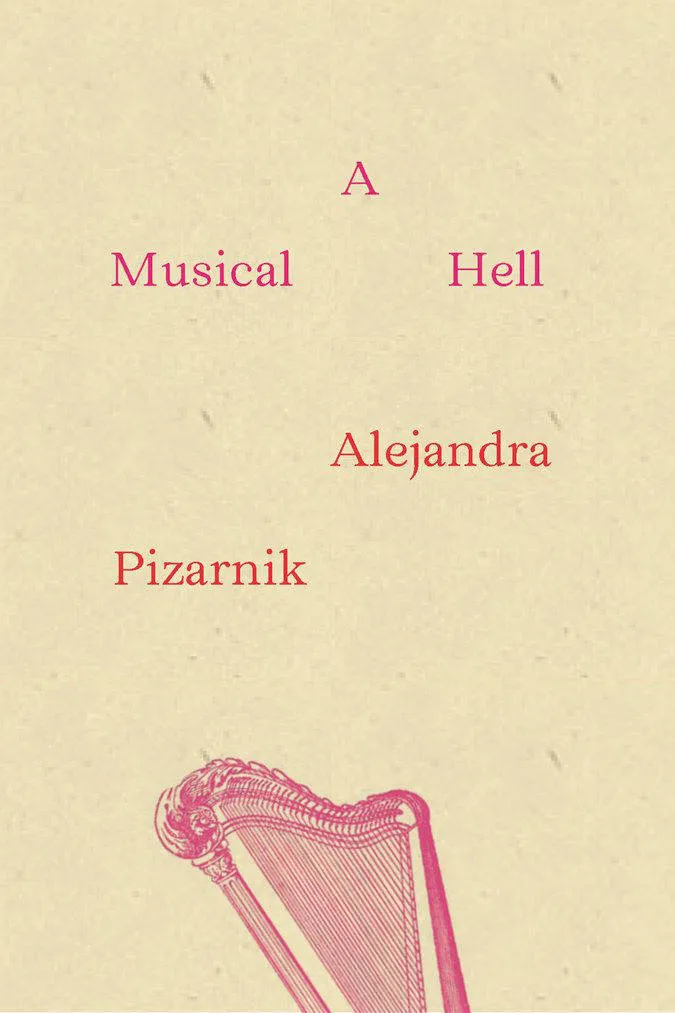
Cover of A Musical Hell

New Directions Publishing

A Musical Hell

Alejandra Pizarnik, Yvette Siegert

Poetry €13.00

“An aura of legendary prestige surrounds the work of Alejandra Pizarnik,” writes César Aira. Her last collection to be published before her suicide in 1972, A Musical Hell is the first book of poems by Pizarnik to be published in its entirety in the U.S. Pizarnik writes at the edge of poetic impossibility, opening with a blues singer, expanding into silence, and closing into a theater of shadows and songs of the drowned.

Cover of Midwinter Day

New Directions Publishing

Midwinter Day

Bernadette Mayer

Poetry €17.00

Midwinter Day, as Alice Notley noted, is an epic poem about a daily routine. A poem in six parts, Midwinter Day takes us from awakening and emerging from dreams through the whole day-morning, afternoon, evening, night-to dreams again:...

a plain introduction to modes of love and reason/ Then to end I guess with love, a method to this winter season/ Now I've said this love it's all I can remember/ Of Midwinter Day the twenty-second of December// Welcome sun, at last with thy softer light/ That takes the bite from winter weather/ And weaves the random cloth of life together/ And drives away the long black night!

Cover of Nightwood

New Directions Publishing

Nightwood

Djuna Barnes

Nightwood, Djuna Barnes' strange and sinuous tour de force, "belongs to that small class of books that somehow reflect a time or an epoch" (Times Literary Supplement). That time is the period between the two World Wars, and Barnes' novel unfolds in the decadent shadows of Europe's great cities, Paris, Berlin, and Vienna—a world in which the boundaries of class, religion, and sexuality are bold but surprisingly porous.

The outsized characters who inhabit this world are some of the most memorable in all of fiction—there is Guido Volkbein, the Wandering Jew and son of a self-proclaimed baron; Robin Vote, the American expatriate who marries him and then engages in a series of affairs, first with Nora Flood and then with Jenny Petherbridge, driving all of her lovers to distraction with her passion for wandering alone in the night; and there is Dr. Matthew-Mighty-Grain-of-Salt-Dante-O'Connor, a transvestite and ostensible gynecologist, whose digressive speeches brim with fury, keen insights, and surprising allusions. Barnes' depiction of these characters and their relationships (Nora says, "A man is another persona woman is yourself, caught as you turn in panic; on her mouth you kiss your own") has made the novel a landmark of feminist and lesbian literature.

Cover of The Hour of the Star

New Directions Publishing

The Hour of the Star

Clarice Lispector

Fiction €14.00

The devastating final work by Brazil’s greatest modern writer, The Hour of the Star tells the haunting tale of Macabéa—a typist who lives in the slums of Rio—underfed, sickly, and unloved, yet inwardly free.

Translated from the Portuguese by Benjamin Moser. With a contribution by Paulo Gurgel and Valente Colm Tóibín.

The Hour of the Star, Clarice Lispector's consummate final novel, may well be her masterpiece. Narrated by the cosmopolitan Rodrigo S.M., this brief, strange, and haunting tale is the story of Macabéa, one of life's unfortunates. Living in the slums of Rio de Janeiro and eking out a poor living as a typist, Macabéa loves movies, Coca-Cola, and her rat of a boyfriend; she would like to be like Marilyn Monroe, but she is ugly, underfed, sickly, and unloved. Rodrigo recoils from her wretchedness, and yet he cannot avoid realization that for all her outward misery, Macabéa is inwardly free. She doesn't seem to know how unhappy she should be. Lispector employs her pathetic heroine against her urbane, empty narrator—edge of despair to edge of despair—and, working them like a pair of scissors, she cuts away the reader's preconceived notions about poverty, identity, love, and the art of fiction. In her last novel she takes readers close to the true mystery of life, and leaves us deep in Lispector territory indeed.

Cover of The Moon is Reading us a Book

pântano books

The Moon is Reading us a Book

Serubiri Moses

Poetry €16.00

THE MOON IS READING US A BOOK is the debut collection of poetry from a writer who displays a wide-ranging palette for storytelling and folklore in a suite of narrative poems. The collection is built around an ensemble of characters that range from known to unknown, through which Serubiri crafts visually-inspired poems that combine the photographic, the intensely personal, and the scholarly. In his book, he manages to domesticate larger-than-life figures, including Zanzibari-born singer-songwriter Freddie Mercury and Nigerian-born photographer Rotimi Fani Kayode. Simultaneously pondered and elastic, Serubiri’s poetry lures these figures – and the reader – into an atmosphere that is only as expansive as the interior landscapes he delineates with each succeeding poem. With this he expresses his own doubts and path, from memories of his native Uganda to New York City, through a psychology of decisions and life choices. 

Serubiri Moses is a Ugandan curator and author based in New York City. He currently serves as faculty in Art History at Hunter College and visiting faculty at the Center for Curatorial Studies, Bard College. He previously held positions at New York University and the New Centre for Research and Practice, and delivered lectures at Williams College, Yale University, University of Pittsburgh, The New School, basis voor aktuelle kunst, and University of the Arts Helsinki. As a curator, he has organized exhibitions at museums including MoMA PS1, New York; Kunst-Werke Institute for Contemporary Art, Berlin; and the Hessel Museum, Bard College, NY. He previously held a research fellowship at the University of Bayreuth; received his MA in Curatorial Studies at Bard College; and is an alumni of the Àsìkò International Art Programme. He serves on the editorial team of e-flux journal. He has published poetry in the online journals Jalada and Badilisha Poetry Exchange, as well as in print in journals Kwani? 7, Kwani? 8, and READ: A Journal of Inter-Translation (2022). His poetry has been reviewed online in The New Inquiry. THE MOON IS READING US A BOOK is his first book of poetry. 

Cover of Cyclamen

Tenement Press

Cyclamen

Alix Chauvet

Poetry €25.00

A debut collection from the poet, artist and designer, a suite of unfaithful translations/transversions of works drawn from Baudelaire’s Les Fleurs du mal / Flowers of Evil, a bunch of flowers in decay, pressed and frayed, ‘a flock of pockmarked words.’

Through these creative ‘translations’ of Charles Baudelaire, Alix Chauvet—artist, designer, poet—refuses fidelity in favour of flirtation: her ‘flowers of evil’ line Amsterdam’s canals, drink from the same rainclouds as Rachel Ruysch’s bewitching bouquets, sprout through peat, and are tended by a distinctly feminist and nomadic sensibility. Chauvet—akin to Olive Moore, Sean Bonney and Lisa Robertson—takes the nineteenth-century French decadent as a contemporary accomplice for aesthetic and linguistic misbehaviour. Walter Benjamin once wrote of Baudelaire that he is ‘der geheime Architekt der Moderne,’ and in Chauvet’s hands, those foundations are made porous, unbuilt into cast shadows, into ribbons, into veins streaming across the page. Accompanied by scans of the French poems and Chauvet’s shadow photography, what Cyclamen ultimately offers us is a regenerative rewilding of the English language: a wondrous terrain ringed by vines of unruly syntax and dotted with the fruit of words refusing domestication by any single tongue. Mia You

Alix Chauvet is a Swiss-French poet and graphic designer based in Amsterdam, taking pleasure in the possibilities of translation. She received her BA in Graphic Design from the Gerrit Rietveld Academie (Amsterdam, 2020), and has since been working independently and in collaboration with contemporary artists. Investigating the relationships between language and body, intimacy and collectivity, past and contemporary, her hybrid practice covers a wide range of visual and linguistic experiments from artist’s book design to experimental translation. Her method is rooted in decelerating the creative process through the use of analogue and unprofitable techniques such as cut-outs, letterpress, linocut, handwriting and painting. Chauvet’s poetic approach follows the same logic, prioritising English over her mother tongue as a way to revise language with both critical detachment and a degree of identification. Her poems have appeared in literary magazines such as Blackbox Manifold, and Cyclamen is her debut collection.

Cover of Death Industrial Complex

Action Books

Death Industrial Complex

Candice Wuehle

Poetry €18.00

Candice Wuehle’s Death Industrial Complex is a meditation on the cultural obsession with the bodies of dead women and an occult invocation of the artist Francesca Woodman. Like Woodman’s photographs with their long exposures and blurred lenses, this book is haunted and haunting, hazy yet devastatingly precise. These are poems as possessions, gothic ekphrases, dialogues with the dead, biography and anti-biography, a stunning act of “cryptobeauty.”

Cover of Listen to the Golden Boomerang Return

Wave Books

Listen to the Golden Boomerang Return

CAConrad

Poetry €20.00

Following their book AMANDA PARADISE: Resurrect Extinct Vibration (winner of the PEN and the Ruth Lilly Prize for Poetry), CAConrad's Listen to the Golden Boomerang Return shifts its attention from the previous book’s focus on communing with animals who are extinct toward communicating and caring for animals still living among us. 

Recalling the historical and symbolic significance of the boomerang as an instrument of return, these poems emerged from a (soma)tic poetry ritual in which the author wrote with animals who have found ways to thrive in the Anthropocene, resulting in sculptural poems that are uninhibited and mysterious as they emerge organically from the bottom of each page. Guided by the urge “to/desire/the world/as it is/not as/it was,” CAConrad writes from an ecopoetics that is generous and galvanizing, reminding us of how our present attentions collectively shape a future humanity.

Cover of Piero Heliczer. Poems & Documents / Poèmes & Documents

After 8 Books

Piero Heliczer. Poems & Documents / Poèmes & Documents

Sophie Vinet, Benjamin Thorel and 1 more

Poet, editor, filmmaker, actor, child star in Mussolini’s Italy, founder of The Dead Language Press and of the Paris Filmmakers Cooperative, Piero Heliczer (1937–1993) was an essential yet secret agent of the 1960s and ’70s counterculture. In the course of his nomadic existence in Rome, New York, London, Amsterdam, Paris, and Préaux-du-Perche, where he spent the last few years of his life, he met and worked with a constellation of avant-garde writers, forged friendships with figures from the Beat Generation and the British Poetry Revival as well as the New York art scene. At the crossroads of many underground experiences, Heliczer’s name appears in books dedicated to the artists and poets he collaborated with during his lifetime—names by the likes of Gregory Corso, Barbara Rubin, Andy Warhol, Jack Smith, Ira Cohen, or The Velvet Underground, a band he participated in creating with his friend Angus MacLise.

This myth obscures the fact that Piero Heliczer was first and foremost a poet. Today, this part of his work is overlooked; it is all the more difficult to encounter because Heliczer himself never collected it. So it was scattered, or lost, in the course of his wanderings. Heliczer favored the circulation of his works rather than their archiving: he was committed to the production of mobile forms—flyers, broadsides, and other ephemera—disseminated his verses in magazines, and preferred public readings and performances to the finished form of the book.

The present volume gathers a significant number of Heliczer’s poetic works through facsimile reproduction of his contributions to more than thirty periodicals—mostly stemming from poets’ presses or universities—published between 1958 and 1979. This collection isn’t “complete”—but it makes available again poems that, in some cases, never circulated after their initial publication. 

Un recueil de poèmes de Piero Heliczer (1937–1993), auteur, éditeur et cinéaste, figure de l’underground et de la contre-culture, proche de Andy Warhol, Gerard Malanga, et Jack Smith. Sa poésie, héritière de la Beat Generation, restitue en métaphores et images saisissantes des expériences et des visions personnelles, tout en s’appuyant sur des formes héritées de la tradition anglaise et des partis-pris typographiques originaux. Ce recueil rassemble des facsimilés des publications originales de poèmes de Heliczer – périodiques d’artistes, revues miméographiées, petits magazines… – accompagnées de leurs traductions en français, ainsi que de plusieurs documents, parmi lesquels une reproduction intégrale d’une publication rare de 1961, Wednesday Paper, et, en insert, un facsimilé d’un placard de 1975, The Handsome Policeman.

Traduction des poèmes: Rachel Valinsky
Publié avec l’aide du CNAP