rile*books

Search books

Search books by title, author, publisher, keywords...

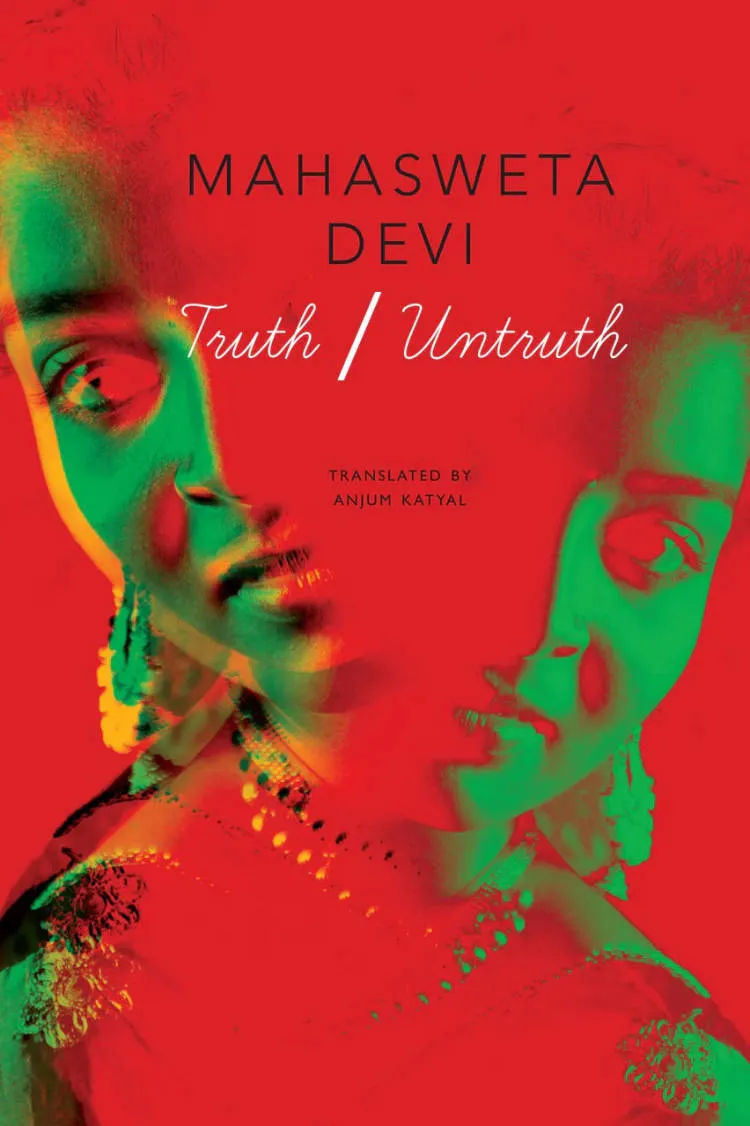
Cover of Breast Stories (Revised)

Seagull Books

Breast Stories (Revised)

mahasweta devi

€16.00

Mahasweta Devi is one of India's foremost literary figures, a prolific and best-selling author in Bengali of short fiction and novels, and a deeply political social activist who has been working in marginalized communities for decades.

Breast Stories is a collection of short fiction that focuses on the breast as more than a symbol of beauty, eroticism, or motherhood. Instead, it is seen as a harsh indictment of an exploitative social system and a weapon of resistance. At a time when violence towards women in India has escalated exponentially, Devi's acerbic writing exposes the inherently vicious systems in Indian society.

Language: English
recommendations

Cover of Passage to the Plaza

Seagull Books

Passage to the Plaza

Sahar Khalifeh

Fiction €24.50

In Bab Al-Saha, a quarter of Nablus, Palestine, sits a house of ill repute. In it lives Nuzha, a young woman ostracized from and shamed by her community. When the Intifada breaks out, Nuzha’s abode unexpectedly becomes a sanctuary for those in the quarter: Hussam, an injured resistance fighter; Samar, a university researcher exploring the impact of the Intifada on women’s lives; and Sitt Zakia, the pious midwife.

In the furnace of conflict at the heart of the 1987 Intifada, notions of freedom, love, respectability, nationhood, the rights of women, and Palestinian identity—both among the reluctant residents of the house and the inhabitants of the quarter at large—will be melted and re-forged. Vividly recounted through the eyes of its female protagonists, Passage to the Plaza is a groundbreaking story that shatters the myth of a uniform gendered experience of conflict.

Cover of Event Factory

Dorothy, a publishing project

Event Factory

Renee Gladman

Fiction €17.00

A “linguist-traveler” arrives by plane to Ravicka, a city of yellow air in which an undefined crisis is causing the inhabitants to flee. Although fluent in the native language, she quickly finds herself on the outside of every experience. Things happen to her, events transpire, but it is as if the city itself, the performance of life there, eludes her. Setting out to uncover the source of the city’s erosion, she is beset by this other crisis—an ontological crisis—as she struggles to retain a sense of what is happening.

Event Factory is the first in a series of novels (also available are the second, The Ravickians; the third, Ana Patova Crosses a Bridge; and the fourth, Houses of Ravicka) that Renee Gladman is writing about the invented city-state of Ravicka, a foreign “other” place fraught with the crises of American urban experience, not least the fundamental problem of how to move through the world at all.

Cover of The Activist

Krupskaya Books

The Activist

Renee Gladman

Poetry €17.00

The Activist begins in the middle of a revolution. There is a protesting group of commuters with a missing leader. There is a bridge that may or may not have been bombed. People speak in nonsense and cannot stop themselves. In the midst of all this, the language of news reporters mixes with the language of confession. The art of this beautifully written book is in how it touchingly illustrates that relations between humans and cities are linked in a more complex interface than most realize. The book is full of entrances and exist, alternate routes and incommensurate geographies. The Activist does not analyze or explain the hopeful desires of protest at the turn of the century, but it does enable us to see them differently. — Juliana Spahr

"Whether this is a dream in which I'm captured or I've been captured and made to think I'm in a dream, I can't figure." Apropos to the rapturous tension The Activist evokes. A covert narrative operating as an event disguised as a repot. A grass trap glimpsed through the lashes of a sleepwalker. Topography of disrupted positionality, reflection girders flaccid memory against the romantic high up. Flea-bitten news and neuralgic placards. You are here**. Is dreaming the medium for crossing the ambiguous borders of talk, responsibility, collectivity, solitude? Or does reading anatomize a phantom bridge that carries you over to an unmappable reality and calls you by your secret name? Root, plan and faction, armed with tongue-tied intensity. You may ask how Renee Gladman knows that this city of slippage is your city, how she holds you within it, riveted. And therein lies the magic of this book. — Tisa Bryant

Cover of Night School

Ma Bibliotheque

Night School

Erin Honeycutt

Fiction €15.00

A synthesis of dreamwork and bookwork, combining collaboration with dream-vision report, creative writing, and AI—a “Media Archaeology of Dreams.” Its central character is the author’s voice in this process through ekphrasis. What/where is the separation between the ekphrastic object, the dream, and its description?

Cover of hello, world?

Semiotext(e)

hello, world?

Anna Poletti

Fiction €18.00

Abandoned by their Dutch partner after giving up their home and their job to follow him to the Netherlands, humanities scholar Seasonal finds themself single in a strange place for the first time in a decade. 

Dipping into the rabbit hole of digital eroticism, Seasonal soon meets László, a male sub who volleys back their cerebral sexts and is seeking a  dominant guide. His dating-app profile—a photo of Foucault and the  ingenuous greeting “Hello, World?”—thinly veils his desire to be annihilated. It's a desire that Seasonal senses they can fulfill. But to do this means crossing the frightening gap between their desires and capacities.  

Seasonal and László embark on an experiment in remaking intimacy outside the Republic of Gender. But as it continues, the two realize they are staging separate confrontations with domination: Seasonal finds they must confront their own relation to the violence and anger that marked their upbringing in working-class, small-town Australia, while László stages his own confrontation with his  decision to leave Viktor Orbán’s Hungary. As they attempt to improvise a  theater of domination that opens up possibilities of reciprocity, the energies of their sexuality stalk this collaboration, threatening to give them exactly what they bargained or begged for. 

A feminist paean to perversity in the tradition of Pauline Réage’s Story of O and Anaïs Nin's Delta of Venus, Anna Poletti's hello, world? dares to fully inhabit female power, and to fully face the violence, beauty, and uncharted territories of human sexuality.

Cover of Orlando

Mariner Books

Orlando

Virginia Woolf

"Come, come! I'm sick to death of this particular self. I want another."

Virginia Woolf described "Orlando" as "an escapade, half-laughing, half-serious; with great splashes of exaggeration, " but many think Woolf's escapade is one of the most wickedly imaginative and sharply observed considerations of androgyny that this century will see.

Orlando is, in fact, a character liberated from the restraints of time and sex. Born in the Elizabethan Age to wealth and position, he is a young male aristocrat at the beginning of the story - and a modern woman four centuries later. The hero-heroine sees monarchs come and go, hobnobs with great literary figures, and slips in and out of each new fashion. Woolf presents a brilliant pageant of history, society, and literature as well as subtle appreciation of the interplay between endings and beginnings, past and present, male and female.

Virginia Woolf(1882-1941) was one of the major literary figures of the twentieth century. An admired literary critic, she authored many essays, letters, journals, and short stories in addition to her groundbreaking novels, including Mrs. Dalloway, To The Lighthouse, and Orlando.