rile*books

Search books

Search books by title, author, publisher, keywords...

Cover of MxT

Coach House Books

MxT

Sina Queyras

€18.00

MxT, or ‘Memory x Time,’ is one of the formulas acclaimed poet Sina Queyras posits as a way to measure grief. These poems mourn the dead by turning memories over and over like an old coin, by invoking other poets, by appropriating the language of technology, of instruction, of diagram, of electrical engineering, and of elegy itself.

Language: English

recommendations

Cover of 3 Summers

Coach House Books

3 Summers

Lisa Robertson

Poetry €18.00

Organs, hormones, toxins, lesions: what is a body? In 3 Summers, Lisa Robertson takes up her earlier concerns with form and literary precedent, and turns toward the timeliness of embodiment. What is form's time? Here the form of life called a poem speaks with the body's mortality, its thickness, its play. The ten poem-sequences in 3 Summers inflect a history of textual voices – Lucretius, Marx, Aby Warburg, Deleuze, the Sogdian Sutras – in a lyricism that insists on analysis and revolt, as well as the pleasures of description. The poet explores the mysterious oddness of the body, its languor and persistence, to test how it shapes the materiality of thinking, which includes rivers and forests. But in these poems' landscapes, the time of nature is inherently political. Now only time is wild, and only time – embodied here in Lisa Robertson’s forceful cadences – can tell.

‘Robertson makes intellect seductive; only her poetry could turn swooning into a critical gesture.' —The Village Voice

Cover of Magenta Soul Whip

Coach House Books

Magenta Soul Whip

Lisa Robertson

Poetry €16.00

Lisa Robertson writes poems that mine the past, its ideas, its personages, its syntax, to construct a lexicon of the future. Her poems both court and cuckold subjectivity by unmasking its fundament of sex and hesitancy, the coil of doubt in its certitude. Reading her laments and utopias, we realize that language, whiplike, casts ahead of itself a fortuitous form. The form brims here pleasurably with dogs, movie stars, broths, painting's detritus, Latin and pillage.

Erudite and startling, the poems in Lisa Robertson's Magenta Soul Whip, occasional works written over the past fifteen years, turn vestige into architecture, chagrin into resplendence. In them, we recognize our grand, saddened century.

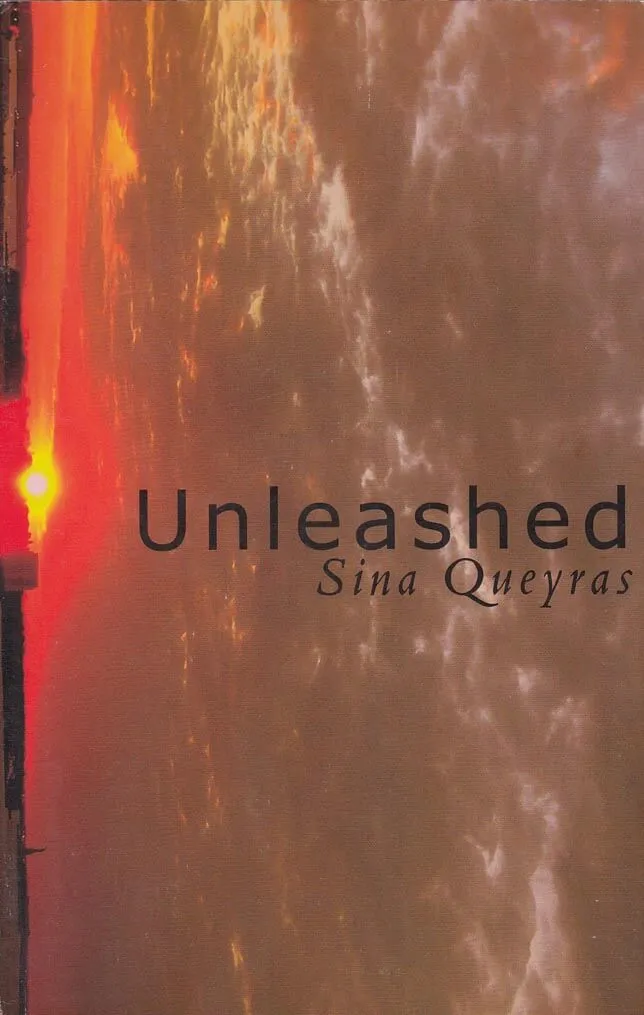
Cover of Unleashed

Book*hug Press

Unleashed

Sina Queyras

Poetry €20.00

05/09/04 Now she is blogging. Now she is sitting on the black couch listening to the sirens wail and the rain fall. Now she is thinking of oysters. Now she is wondering why this is worth sharing. Now she is thinking, how decipher what is worth reading? Who is to say? Sifters. She thinks we have become a nation of sifters. So began a three-year experiment in blogging. An experiment begun for many reasons—a way for an expat to keep in touch with fellow Canadian writers and artists, a way to come to terms with the increasing relevance of the internet in literary lives, and a way to figure out why, after decades of gains, women writers are still grossly underrepresented in critical dialogues.

With an afterword by Vanessa Place.

Cover of nnn2. - no no no celestial journal

no more poetry

nnn2. - no no no celestial journal

nmp

Periodicals €10.00

published commonly, no no no expounds an experimental poetic offering, both text & art.

each issue features a limited edition artwork. which can be tacked or framed or stored in a drawer.

celestial in nature, no no no takes the form required, and necessary.

Cover of The Arab Apocalypse

Post Apollo Press

The Arab Apocalypse

Etel Adnan

Poetry €25.00

Translated from the French by the author.

“From time to time, there occurs what suspends time, revelation—at least for certain people, martyrs. But then the apocalypse, revelation, is withdrawn, occulted by the ‘apocalypse,’ the surpassing disaster, so that symptomatically apocalypse’s primary sense (from Greek apokalypsis, from apokalyptein to uncover, from apo- + kalyptein to cover) is occulted by its secondary meaning, and martyr’s primary sense, witness, is occulted by its secondary, vulgar meaning: ‘a person who suffers greatly or is killed because of their political or religious beliefs’… While the Arab ‘apocalypse’ as surpassing disaster leads to a withdrawal of Arabic tradition, the apocalypse as revelation leads to Arabic tradition’s vertiginous extension.” — from the Foreword by Jalal Toufic

Etel Adnan was born in Beirut, Lebanon in 1925. She is a celebrated writer, essayist, and playwright, and is the author of more than twenty books in all these disciplines. Her work as a whole is a faithful record of the times and places she has lived in Beirut, Paris, and in the San Francisco Bay Area. At least eighteen works by Adnan have been published in English. They include Sitt Marie Rose (Post-Apollo Press, 1982); The Arab Apocalypse (Post-Apollo Press, 1989); Sea and Fog (Nightboat Books, 2012), winner of the Lambda Literary Award for Lesbian Poetry and the California Book Award for Poetry; Premonition (Kelsey Street Press, 2014); Surge (Nightboat Books, 2018); Time (Nightboat Books, 2019), winner of the Griffin Poetry Prize and the Best Translated Book Award; and Shifting the Silence (Nightboat Books, 2020). In 2021, Litmus Press published a second edition of Journey to Mount Tamalpais (originally published by The Post-Apollo Press), which included nine new ink drawings by Adnan. Her paintings, described by New York Times art critic Roberta Smith as "stubbornly radiant abstractions," have been widely exhibited. Spanning media and genres, Adnan's writings have led to numerous collaborations with artists and musicians, including the French part of CIVIL warS, a multi-language opera by American stage director Robert Wilson, performed in Lyon and Bobigny in 1985.

Cover of Don't Call Us Dead

Graywolf Press

Don't Call Us Dead

Danez Smith

Poetry €16.00

Award-winning poet Danez Smith is a groundbreaking force, celebrated for deft lyrics, urgent subjects, and performative power. Don’t Call Us Dead opens with a heartrending sequence that imagines an afterlife for black men shot by police, a place where suspicion, violence, and grief are forgotten and replaced with the safety, love, and longevity they deserved here on earth. Smith turns then to desire, mortality—the dangers experienced in skin, body, and blood—and a diagnosis of HIV positive. “some of us are killed / in pieces,” Smith writes, “some of us all at once.” Don’t Call Us Dead is an astonishing collection, one that confronts America where every day is too often a funeral and not often enough a miracle. 

Danez Smith is the author of [insert] boy, winner of the Lambda Literary Award for Gay Poetry and the Kate Tufts Discovery Award. Smith has received fellowships from the McKnight Foundation and the Poetry Foundation, and lives in Minneapolis.

Cover of Drafts

TEXTS press

Drafts

Allison Parrish

Poetry €19.00

A weaving draft is a kind of notation for planning and sharing woven textil structures. The threading, along the top, shows how the warp is threaded through the heddles and frames; the treadling, along the right-hand side, show the order in which the treadles of the loom are to be pressed; and the tie-up, in the upper right-hand corner, shows how each treadle interacts with the loom’ frames. The drawdown, in the lower left, shows whether the warp or weft will be on top at any particular intersection of threads—thereby providing a “preview” of the completed textile. Often a draft diagram will indicate the intended color of the warp and weft threads, and the drawdown will show the completed textile’s color patterns. In “Drafts,” Allison uses letters instead of colors, melding digital weaving with writing.

WITHOUT THE E is a series of pamphlets responding to a presence or an absence felt in contemporary digital culture.

Cover of Not a Force of Nature

Futurepoem

Not a Force of Nature

Amy De'Ath

Poetry €21.00

If capital makes life a seething, complex nightmare for most people on the planet's surface, if "words do cleave the producer from the land," then what does all this dispossession feel like? Amy De'Ath turns poetry into a hot, potent, and highly funny form of criticism, in which social force is felt intimately, and voiced in the acid niceness of a work email. Amy's poems move like pieces of machinery in a cognitive amusement park, which spit you a thousand feet into the air but keep your viewpoint fixed on the same spot as before—what's different? "Land in Saskatchewan, land in Delhi," or "everything…that you want from women and gays." Not a Force of Nature makes me want to change everything. "Behold me I'm you now," Amy writes—we should be so lucky, to be thus transformed. — Kay Gabriel

Not a Force of Nature's expertly crafted poems explore the catastrophe we live among and speak through. They form a sort of feminist manifesto addressed to all forms of resistance. But also: here are love sonnets! This book is angrily precise and always a lot of fun. "No, you're a Canadianist!" — Kevin Davies

Not a Force of Nature is the kind of book that becomes possible only after rejecting the "we" evoked so often in contemporary literary culture—sometimes said to need poetry now more than ever, sometimes called community. Amy De'Ath's motley vision of solidarity, of "actual emboldened people," is way weirder, more lively, and possible. Nor do these poems content themselves, like the ghost of Marxist theory past, with pointing towards the contradictions that surround them. Do you remember email? Sonnets? Not a Force of Nature is like that, thrashing inside generic forms and always coming next: after the tendency of the rate of profit to fall, after Jane's abortion service, after the 1970s, 80s, and 90s, after Creeley, after Raworth, after Mayer, after the Xenofeminist Manifesto, after Pluto enters Aquarius. "There are still tactics like this roaming free," De'Ath writes. There are still these fervent lyric parries. Be with Not a Force of Nature now. — Stephanie Young

Through slips of verbal acuity, Amy De'Ath scrapes her way out of determinism to a world "made by hands," where our material relations are ours to make and break. History is long and history is short. History is translucent. De'Ath presents the Ferris wheel of capitalist production, where the subject lives once as worker, twice as commodity. Here, in these "concrete trousers," is a "totally liberated" working class poem turning everything into nothing as praxis. — Anahita Jamali Rad