rile*books

Search books

Search books by title, author, publisher, keywords...

Cover of It Was Like Watching

The Last Books

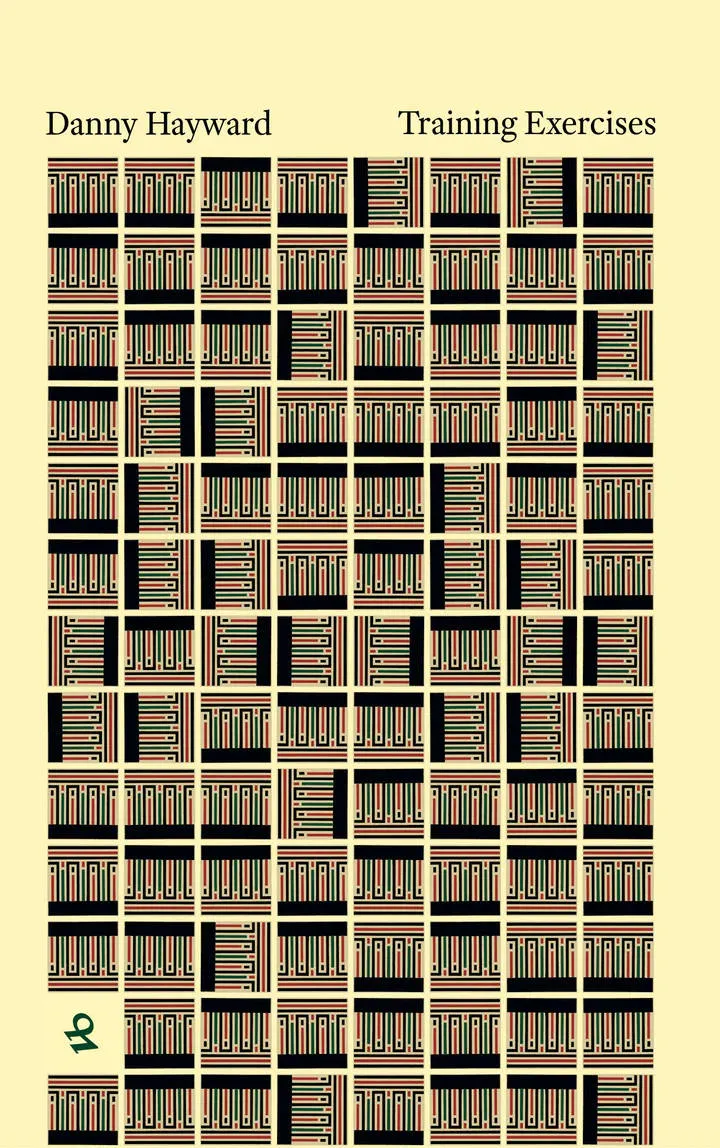
It Was Like Watching

Danny Hayward

€14.00

Dear ____,

I happened to look for a while out of “my” window on the 17th floor Palliativstation of the Wiener Allgemeinen Krankenhauses last night, where an enormous orange moon was hanging about, consorting with a lick of dark cloud, near to the tiny gaggle of skyscrapers. I didn’t have much to say for myself and so it just sort of looked back at me. 

Every day friends and well-wishers come here and as always I want to run to my room and read a book until they’ve left but for the first time in my life my room is also the room they want to visit, and so I can’t. I wrote down yesterday as best as I could the words of my last long conversation with Marina: there might be more, but the words are running away from her now, which only makes you realise how small and insignificant they are, fleeing from something (from someone) who remains exactly who they were even in their absence: like dust falling from the sun.

A voyage in the insight which comes as a kiss and follows as a curse, made after you ran out of things to say.——first halting efforts at mutual understanding——love letters from twelve years ago. journal entries from fifteen years before lick at the edges like flames. Opaque coloured shadows, projected in three dimensions——of a——future that——has. never ceased to exist and which——Doesn’t——.——.——arrive to speak about their fears.—— Beginning with a naked bathroom selfie. 

An attempt to live nonjudgmentally and without fear, against the desire to be something other than who you were, as a basic form of class hatred, a fear of the common and of everything that happens there, near speechlessness, trailing off, only sometimes coming back to life again, shame dies so that everything else can be saved, and everything else remains present against the background of this absence, beneath the harsh overhead light, as you pull on the pathetic, unassuming string of the pullcord. 

Dedicated to one person, written by one another. “Poems written by / different poets / are my nakedness.”

Published in 2026 ┊ 80 pages ┊ Language: English

recommendations

Cover of The Letters of Douglas Oliver and J. H. Prynne

The Last Books

The Letters of Douglas Oliver and J. H. Prynne

Joe Luna

Poetry €25.00

Douglas Oliver (1937–2000) and J. H. Prynne (b. 1936) are two of the most original and ambitious poets of the contemporary era. Eschewing the conservativism of mainstream postwar British verse and embracing influences from America and Europe, each developed their craft through continuous correspondence and exchange as part of the febrile scene of poetical community and contestation that emerged in Cambridge in the 1960s. Their works over the following decades exhibit frequent shifts in form and style, from Prynne’s radical transformation and dispersal of the lyric tradition to Oliver’s adaptation of dream visions and medieval-inspired verse satires.

Their letters are a record of both the high stakes and playful experiments that constitute the writing lives of two singular poets determined not just to engage with modern political and social life during decades of crisis and upheaval, but to contribute through the circulation and publication of poetry to what Oliver calls “a community of political ethic.” Over the course of more than thirty years of friendship and mutual appreciation, the motivations for, and consequences of, their poems are constantly worked through, tested out, evaluated, and contradicted, always with a view to what the poetry means for the other, for the poetical communities they inhabit, and for the life of poetry itself.

This volume collects for the first time the majority of Oliver and Prynne’s correspondence, allowing new insights into the literary, political, and historical contexts of their lives and writing. An introduction, notes, and appendices provide a scholarly apparatus to situate Oliver and Prynne among the poets and publishers with whom they worked and socialized, and to identify and expand upon their frequent references to an enormous range of source material and reading matter.

“The correspondence between J. H. Prynne and Douglas Oliver is gripping and illuminating, brilliantly edited and completely absorbing. Two great poetic intelligences respond to each other’s work and to the society around them, thinking through the issues at stake in their poetic practice, their differences in approach, the different worlds they inhabit, their shared commitment to writing poetry and their admiration of each other’s work. The letters, complex as their matter can be, repay repeated reading; taken together, over a period of 33 years, they chart the context and creation of some of the most significant work in late twentieth-century poetry. This is an utterly engaging volume, and should be read by anybody interested in poetry and its place in the contemporary world.”—Ian Patterson

“For writers who welcome each other as peers, the exchange of letters is the spontaneous moment of exposure, the drawing out of selves. It is thinking in mutuality. In this thoughtfully edited and carefully, even beautifully, presented correspondence between Douglas Oliver and J. H. Prynne, two of the preeminent poets of the ‘British Poetry Revival’ of the post-World War II generations, we witness two writers of immense gifts thinking with each other, coming alive to thought and, ultimately, a shared world or community of wish. There is life, there is death; there is grief, there is anger – and love – but always there is a seeking, an attempt to arrive at a language for our worlds. Henceforth, one cannot imagine reading the work of either Oliver or Prynne without this correspondence and all that it offers in openings onto what Oliver himself saw as ‘the poet’s full performance [which] is the whole life’s work.’ It is a glimpse into an athanor of poetic creation.”—Michael Stone-Richards

Cover of First Nettles

The Last Books

First Nettles

Dom Hale

Poetry €15.00

First Nettles collects poems written between 2021 and 2024, from precarious off-key lyrics to sprawling elegies of damaged life. A book of flailing, desperate music, hurt and hopeful, held together by pins and gaffer tape, art and courage and comradeship. Includes the sequence “Seizures” (2022) – “perfect in its openness and lyrical disfigurement” (Danny Hayward).

“[An] exhilarating collection […]. The sequences here are ferociously and admirably radical, with some superb political satire and verve to the poems.”  —Adam Piette, Blackbox Manifold, no. 34


Designed and typeset by Phil Baber; cover collage by Sam Keogh

Cover of Peach machine

The Last Books

Peach machine

Imogen Cassels

Poetry €9.00

Peach machine comprises nine months of poems, tracing a recurrent cycle of sickness, heartbreak, reparation, and recovery from late summer back into early Spring. The work is roughshod: grieving, oxygen-starved, jetlagged, reflective, and relieved.

Designed and typeset by Phil Baber.

Cover of My Earliest Person

The Last Books

My Earliest Person

Jennifer Soong

Poetry €15.00

Lyrical drifts warped by syntax into blizzarding softness; odes to beauty, meaning, and inexperience splintered by history and grammar. An aqueous surface marbled with the lightest possible touch, lost footings arrested by change’s near-griplessness. 

None of this matters. It’s only supposed
to save you from yourself. None of this
matters, when I try to take it out of me into
the world, which to find I can praise
                                                          I go out to

Composed across two winters between late 2022 and early 2024. Contains 43 poems.

“This luscious and needle sharp collection is a real feat of the textual imagination, wow.”   —Adam Piette, Blackbox Manifold, no. 34

Cover of In Abeyance

The Last Books

In Abeyance

John Wilkinson

Poetry €14.00

With this new book of sedimented lyric, John Wilkinson’s poetry enters a terrain of creatures flattened in shale, in flat screen and in digital code. If Silicon Valley would repopulate Jurassic Park and defeat death, Wilkinson’s poetry would make actual what slides past in the disregarded day, whether the flattening of a city or the return of seasonal blossom. This poetry swells dry roots; it breaches the total coverage that flatlines the heart’s response, through its urgent and generous rhythms.

Designed and typeset by Phil Baber.

Cover of Tripwire 23 - Work/Anti-work

Tripwire Journal

Tripwire 23 - Work/Anti-work

David Buuck

Periodicals €18.00

Work/Anti-work issue with writing by Nat Raha /. lisa minerva luxx /Ghayath Almadhoun, trans. Catherine Cobham / Jacqui Germain / Jazra Khaleed, trans. Peter Constantine / Finn Finneran / Cait O’Kane / Rebecca Kosick / Lara Durback Skye /Lotta Thießen / William Rowe / Danny Hayward / Rona Lorimer / Zoe Beloff / Jike Ayou, trans. Yě Yě / Miguel de Vallester, trans. Erasmo Pantoja / Lucas Martínez / ko ko thett / Hung Q. Tu / Raymond de Borja / etaïnn zwer, trans. Ilan A.L.S. Erikson Weisbrod / Annie Raab on Taylor Portela / Rachael Guynn Wilson on Lyn Hejinian / Will Rowe on Danny Hayward / Chloe Watlington on Joshua Clover

Cover of The Grimace of Eden, Now

Fonograf Editions

The Grimace of Eden, Now

Cody-Rose Clevidence

Poetry €19.00

The playful, inventive, and lyrically quick poems comprising The Grimace of Eden, Now orbit the strange space halfway between Tennyson and the Metaverse, veering between the natural world and a sci-fi universe, between inner feelings and outward observations, with questions of divinity alongside domestic life, spiders, dishes, and spaceships. The roving eye of these poems wanders through spacetime carrying irreverent theologies and exploring what it could mean to be living, sensate, and awake in this weird moment in time, exposing a mixture half of awe and half of madness. 

Cody-Rose Clevidence is the author of Aux Arc / Trypt Ich (Nightboat Books, 2021), Listen My Friend, This is the Dream I Dreamed Last Night (The Song Cave, 2021), Flung/Throne (Ahsahta, 2018), and BEAST FEAST (Ahsahta Press, 2014), as well as several chapbooks (Fonograf Editions, flowers and cream, NION, garden door press, Auric). Occasionally a visiting poetry professor at the Iowa Writers Workshop, they live in the Arkansas Ozarks alongside three loyal, sentient pets, and the continuous void.

Cover of Drafts

TEXTS press

Drafts

Allison Parrish

Poetry €19.00

A weaving draft is a kind of notation for planning and sharing woven textil structures. The threading, along the top, shows how the warp is threaded through the heddles and frames; the treadling, along the right-hand side, show the order in which the treadles of the loom are to be pressed; and the tie-up, in the upper right-hand corner, shows how each treadle interacts with the loom’ frames. The drawdown, in the lower left, shows whether the warp or weft will be on top at any particular intersection of threads—thereby providing a “preview” of the completed textile. Often a draft diagram will indicate the intended color of the warp and weft threads, and the drawdown will show the completed textile’s color patterns. In “Drafts,” Allison uses letters instead of colors, melding digital weaving with writing.

WITHOUT THE E is a series of pamphlets responding to a presence or an absence felt in contemporary digital culture.