rile*books

Search books

Search books by title, author, publisher, keywords...

Cover of Bl_nk: essays and interviews

Book*hug Press

Bl_nk: essays and interviews

M. NourbeSe Philip

€18.00

BLANK is a collection of previously out-of-print essays and new works by one of Canada's most important contemporary writers and thinkers. Through an engagement with her earlier work, M. NourbeSe Philip comes to realize the existence of a repetition in the world: the return of something that, while still present, has become unembedded from the world, disappeared. Her imperative becomes to make us see what has gone unseen, by writing memory upon the margin of history, in the shadow of empire and at the frontier of silence.

In heretical writings that work to make the disappeared perceptible, BLANK explores questions of race, the body politic,timeliness, recurrence, ongoingness, art, and the so-called multicultural nation. Through these considerations, Philip creates a linguistic form that registers the presence of what has seemingly dissolved, a form that also imprints the loss and the silence surrounding those disappearances in its very presence.

M. NourbeSe Philip is a poet, essayist, novelist, playwright, and former lawyer who lives in Toronto. She is a Fellow of the Guggenheim and Rockefeller (Bellagio) Foundations, and the MacDowell Colony. She is the recipient of many awards, including the Casa de las Americas prize (Cuba). Among her best-known works are: She Tries Her Tongue, Her Silence Softly Breaks, Looking for Livingstone: An Odyssey of Silence, and Zong!, a genre-breaking poem that engages with ideas of the law, history, and memory as they relate to the transatlantic slave trade.

published 2017

Language: English

recommendations

Cover of Nilling

Book*hug Press

Nilling

Lisa Robertson

Poetry €18.00

NILLING: PROSE is a sequence of five loosely linked prose essays about noise, pornography, the codex, melancholy, Lucretius, folds, cities and related aporias: in short, these are essays on reading.

"I have tried to make a sketch or a model in several dimensions of the potency of Arendt's idea of invisibility, the necessary inconspicuousness of thinking and reading, and the ambivalently joyous and knotted agency to be found there. Just beneath the surface of the phonemes, a gendered name rhythmically explodes into a founding variousness. And then the strictures of the text assert again themselves. I want to claim for this inconspicuousness a transformational agency that runs counter to the teleology of readerly intention. Syllables might call to gods who do and don't exist. That is, they appear in the text's absences and densities as a motile graphic and phonemic force that abnegates its own necessity. Overwhelmingly in my submission to reading's supple snare, I feel love."

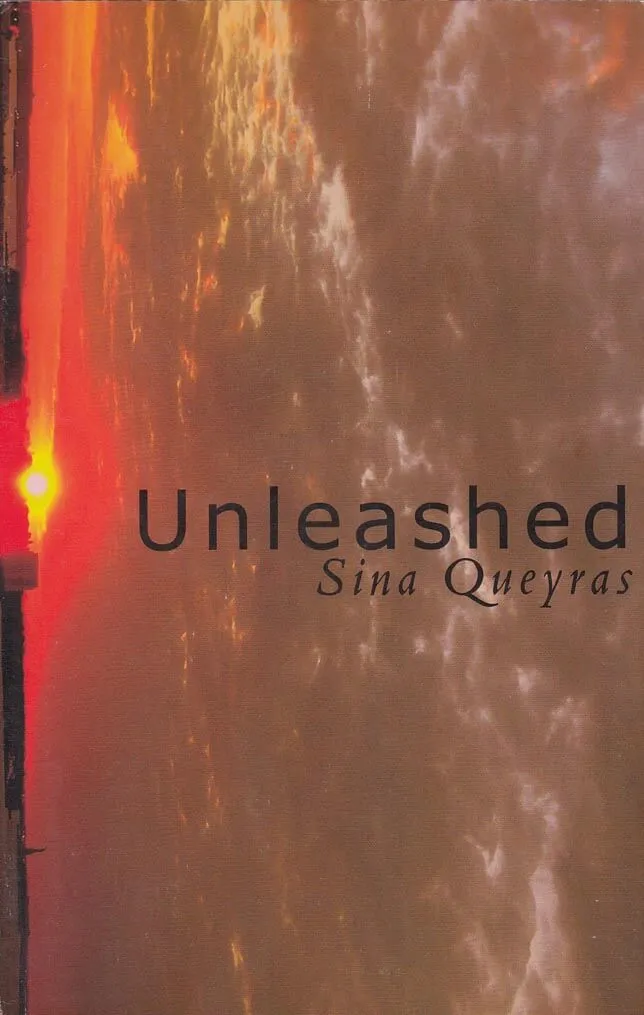
Cover of Unleashed

Book*hug Press

Unleashed

Sina Queyras

Poetry €20.00

05/09/04 Now she is blogging. Now she is sitting on the black couch listening to the sirens wail and the rain fall. Now she is thinking of oysters. Now she is wondering why this is worth sharing. Now she is thinking, how decipher what is worth reading? Who is to say? Sifters. She thinks we have become a nation of sifters. So began a three-year experiment in blogging. An experiment begun for many reasons—a way for an expat to keep in touch with fellow Canadian writers and artists, a way to come to terms with the increasing relevance of the internet in literary lives, and a way to figure out why, after decades of gains, women writers are still grossly underrepresented in critical dialogues.

With an afterword by Vanessa Place.

Cover of The Men

Book*hug Press

The Men

Lisa Robertson

Poetry €16.00

The Men explores a territory between the poet and a lyric lineage among men. Following a tradition that includes Petrarch's Sonnets, Dante's work on the vernacular, Montaigne, and even Kant, Robertson is compelled towards the construction of the textual subjectivity these authors convey-a subjectivity that honors all the ambivalence, doubt and tenderness of the human. Yet she remains angered by the structure of gender these works advance, and it is this troubled texture of identity that she examines in The Men.

Cover of Global Fascisms – Reader

Archive Books

Global Fascisms – Reader

Essays €21.00

A critical examination of the aesthetic, social, and political dynamics of fascism, questioning its appeal and ideological mechanisms.

Around the world, there is a glaring turn towards a sinister  form of politics. One is reluctant to name it for what all its recognizable signs point to, for fear of accepting the reality that fascism is here and it is everywhere. Amid a raging discussion about where authoritarianism ends and fascism begins, the Global Fascisms—Reader critically examines the aesthetic, social, and political dynamics of fascism, questioning its appeal and ideological mechanisms, and looking at how current authoritarian conjunctures are being condoned, contested, and resisted across the globe. The longform essays, poetry, and conversations with experts collected here accompany the eponymous exhibition at Haus der Kulturen der Welt (HKW), engaging with a quintessentially modern and eerily contemporary political mo(ve)ment.

Contributions by Stefan Baghiu, Thomas Biebricher, Cosmin Costinaș, Kwame Dawes, Jakob Grüner, June Jordan, Jeremy Knowles, Canberk Köktürk, Henrieke Kohpeiß, Daniel Loick, Clara E. Mattei, Bonaventure Soh Bejeng Ndikung, M. NourbeSe Philip, Vanessa Rocco, Arundhati Roy, Aaron Skabelund, Quinn Slobodian, Eric Otieno Sumba, Terese Svoboda, Julia Adeney Thomas, Vanessa E. Thompson, Alberto Toscano, Maxi Wallenhorst.

Cover of A Grammar Built with Rocks

Wendy's Subway

A Grammar Built with Rocks

Shoghig Halajian, Suzy Halajian

Featuring writing and artistic practices that trace the racialized and gendered relationship between bodies and land, A Grammar Built with Rocks explores artists’ engagement with sites of physical dispossession and socio-ecological crisis, highlighting how creative research methodologies can serve as radically new place-making practices. The publication brings together a range of feminist-decolonial texts and visual contributions that explore how movement, transience, and improvisation offer alternative ways of being-together while being-in-place.  

Contributions by: Basel Abbas and Ruanne Abou-Rahme with Fawz Kabra, Jheanelle Brown and Julien Creuzet, Carolina Caycedo, Ryan C. Clarke and Cauleen Smith, DAAR—Decolonizing Architecture Art Research with Nicola Perugini, Sandra de la Loza, Demian DinéYazhi’, rafa esparza, Mashinka Firunts Hakopian, Tia-Simone Gardner, Raquel Gutiérrez, Suzanne Kite with Mahpíy̌a Nážinn, Candice Lin, Jumana Manna, K-Sue Park, Christine Rebet, Susan Silton, and Asiya Wadud.

The book also includes a reader, with grounding texts, sources of inspiration, and research references, by Jason Allen-Paisant, Dionne Brand, Suzanne Césaire, Lisa Lowe, Camila Marambio and Cecilia Vicuña, Robyn Maynard and Leanne Betasamosake Simpson, M. NourbeSe Philip, and K. Wayne Yang.

About the editors

Shoghig Halajian is a curator, writer, and artist whose work explores queer and diasporic imaginaries, place-based practices, and experiments in collectivity and collaboration. She is co-editor of the online journal, Georgia, which is supported by a Creative Capital | Andy Warhol Foundation Arts Writers Grant. Select curatorial projects include: A grammar built with rocks (Human Resources LA, One Archives at the USC Libraries, and REDCAT, 2018); At night the states (Hammer Museum, 2017); DISSENT: what they fear is the light (LACE, 2016); and rafa esparza: I have never been here before (LACE, 2015). She was a TBA21 Ocean Space Fellow in Venice (2021) and a curatorial fellow at École du Magasin in Grenoble (2011), where she co-curated the exhibition, The Whole World is Watching, on the the collective Vidéogazette (1973–76), which organized a public access television program in the city. She received her PhD in Art History, Theory, and Criticism with a specialization in Critical Gender Studies from the University of California, San Diego in 2024. 

Suzy Halajian is a curator and writer based in Los Angeles, where she serves as the Executive Director and Curator at JOAN. Her practice is invested in long-term collaborations with artists, critically engaging with the intersections of art, politics, and social histories. She explores strategies of image-making through the lens of colonial histories and contemporary surveillance states. Halajian has curated exhibitions and public programs at institutions such as Los Angeles Contemporary Exhibitions (LACE), ONE Archives at the USC Libraries, the Hammer Museum, and Human Resources Los Angeles, as well as Tanya Bonakdar Gallery (New York), Oregon Contemporary (Portland), Kunstverein (Amsterdam), UKS (Oslo), Galerie Hubert Winter (Vienna), and the Sursock Museum (Beirut). She also serves on the Programming Committee at Human Resources and has worked with nonprofit organizations including the MAK Center for Art and Architecture (Los Angeles) and Ashkal Alwan (Beirut). Her curatorial work and writing have been supported by the Graham Foundation, the Andy Warhol Foundation Arts Writers Grant—for Georgia, a journal she co-founded and co-edits with Anthony Carfello and Shoghig Halajian—and a Curatorial Research Fellowship from the Andy Warhol Foundation for the Visual Arts. Halajian’s writing has appeared in ArteEast, BOMB, X-TRA, Ibraaz, and other publications. She holds an MA from the Center for Curatorial Studies at Bard College and is currently a PhD candidate in the Film and Digital Media program at the University of California, Santa Cruz.

Cover of Imperfect Solidarities

Floating Opera Press

Imperfect Solidarities

Aruna D'Souza

Essays €18.00

Art, empathy and political solidarity.

Can empathy deliver political change? Does art that elicits emotional identification with others take us where we need to go? In Imperfect Solidarities, writer and art historian Aruna D'Souza offers observations pulled from current events as well as contemporary art that suggest that a feeling of understanding or closeness based on emotion is an imperfect ground for solidarity. Empathy—and its correlate, love—is a distraction from the hard work that needs to be done to achieve justice. Rather, D'Souza contends, we need to imagine a form of political solidarity that is not based on empathy, but on the much more difficult obligation of care. When we can respect the unknowability of the other and still care for and with them, without translating ourselves into their terms, perhaps we will fare better at building political bridges.

Aruna D'Souza is a writer and critic based in New York. She is a regular contributor to The New York Times and 4Columns.org, where she is a member of the editorial advisory board. Her writing has also appeared in The Wall Street Journal, CNN.com, Bookforum, Frieze, Momus, and Art in America, among other places. Her book, Whitewalling: Art, Race, and Protest in 3 Acts (Badlands Unlimited), was named one of the best art books of 2018 by The New York Times. She is the recipient of the 2021 Rabkin Prize for art journalism and a 2019 Andy Warhol Foundation Art Writers Grant.

Cover of Afterimage Nos. 8/9, Beginning … and Beginning Again

The Visible Press

Afterimage Nos. 8/9, Beginning … and Beginning Again

Simon Field, Guy L'Eclair

Essays €16.00

The independent British film journal Afterimage published thirteen issues between 1970 and 1987. International in scope, it surveyed the many forms of radical cinema during an extraordinary period of film history. Having emerged in the wake of post-1968 cultural and political change, Afterimage charted contemporary developments with special issues on themes such as the avant-garde, Latin American cinema and visionary animation, and also looked back at early film pioneers. It published many of the leading critics of the period and vitally provided a forum for filmmakers’ writings and manifestos.

Cover of The Flesh

Tabloid Publications

The Flesh

Yves B. Golden

Essays €18.00

The Flesh is a collection of Yves B. Golden's poems, lyric essays and social criticism – and often these generic distinctions become blurred. Published by Ediciones La Escocesa (Barcelona, ES), TABLOID facilitated this book's production as editors and book designers. A selection of Golden's texts are also translated by Leto Ybarra, rendering the author's work into Spanish for the first time.

“Respectfully! The Flesh feels like a conjuring and a force of nature—unyieldingly raw, full of delectable sensitivity that shapes a world Yves B. Golden deliveries with formidable honesty—where her word is the journey, the body and the bond. Yves writes: ‘not one bird is declined entry into heaven’. The Flesh is succulent in the mouth of the mother— Yves is a steward of time machines, celestial bliss and untethered healing. The Flesh unties the tongue, waters the mouth and the garden. Within Yves’ 5th book she offers us a timeline in recognizing that all birds and angels alike can touch the sky. We are always, already, held and drenched in glory and deserving of love and safety. The Flesh is Black like obsidian. May our love bloom like the flesh in every lifetime.”
- keioui keijaun thomas

“Yves B Golden has given us a protection spell against tyranny; a Blue Guide for the conscious and the daydream; raw free jazz that knows the standards as well. Golden’s linguistically liberated fantasies can transmute into a body of politically imperturbable ethoses in the same sentence. This book offers information for an evolutionary sensitivity, for the next level of sense-making and particularity of the human being. Though the poet urges us to de-realize the flesh, to split our own heads open, we must also accommodate the flesh’s intangibles that interlock, conjoin, negate, and negotiate: such ‘outward and inward facing conundrums’ go on and on. Welcome this ‘bearer of turbulent news.’”
- Losarc Raal